 EN
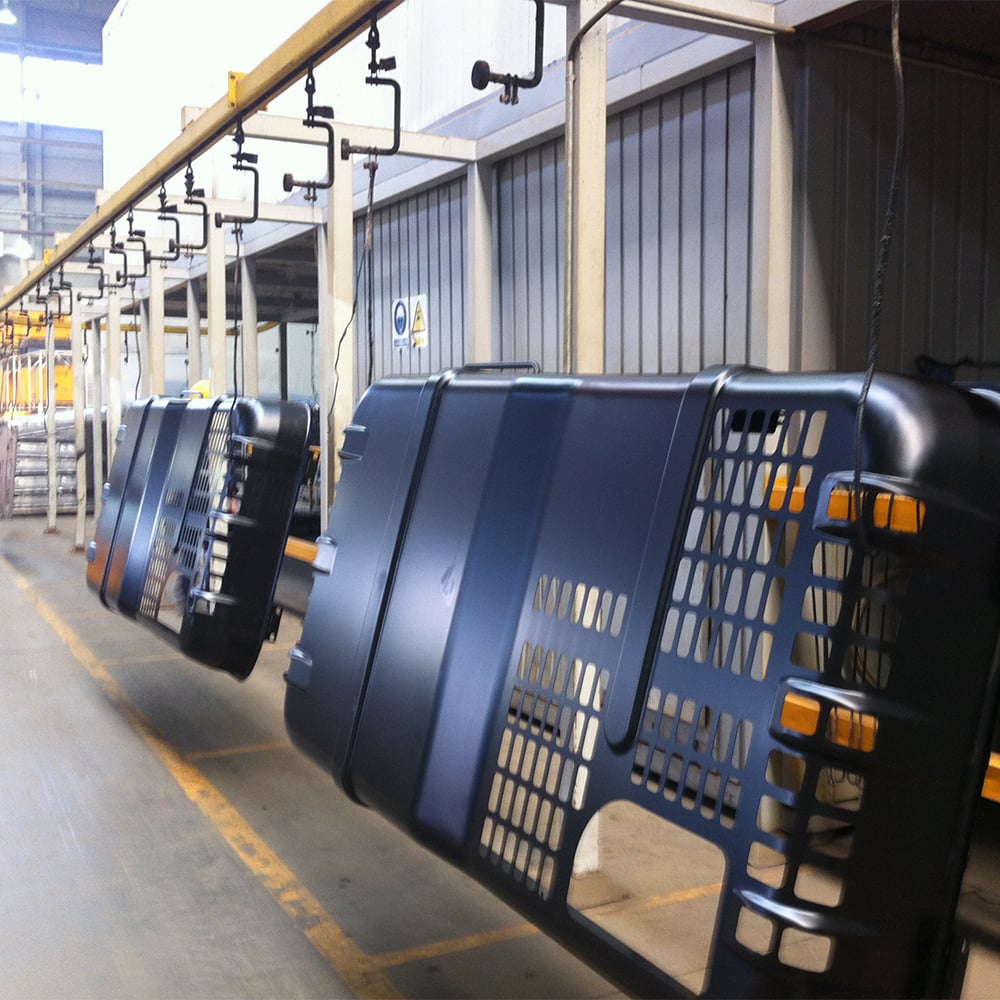
Capacity planning for an e-coating line is one of the most critical decisions high-volume manufacturers face when scaling production operations. An e-coating line must be designed and optimized to handle current demand while remaining flexible enough to accommodate future growth. The challenge is determining the right balance between equipment investment, production throughput, and operational efficiency to ensure your facility can meet delivery schedules without excessive idle capacity or costly bottlenecks.
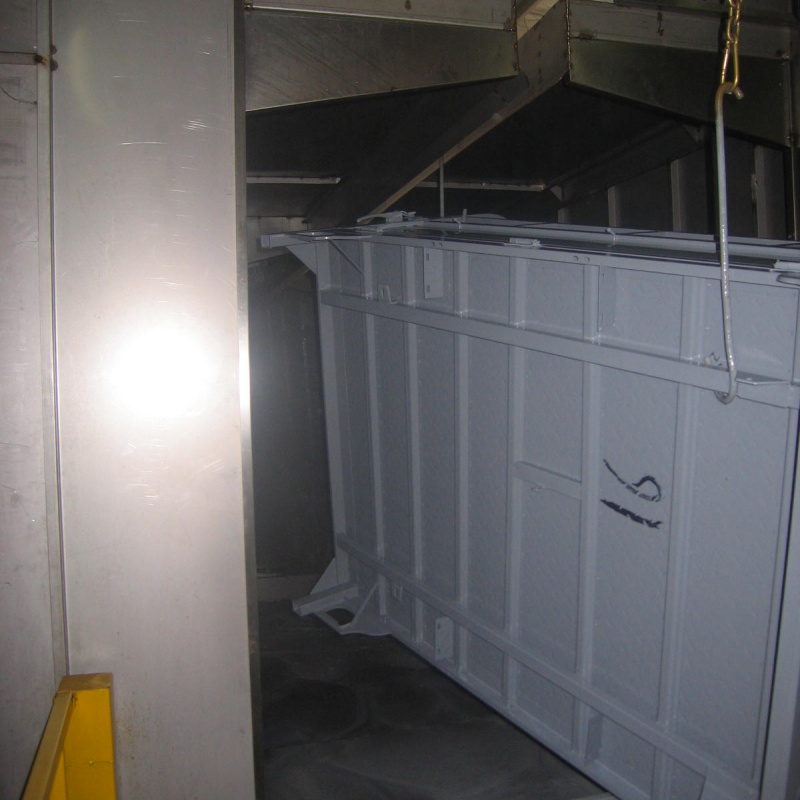
Planning an e-coating line involves understanding not only the desired output volume but also the technical parameters that drive productivity. The relationship between cycle time, tank residence time, conveyor speed, and part geometry directly impacts the maximum throughput an e-coating line can achieve. Without proper capacity analysis, manufacturers often invest in undersized equipment that becomes a production constraint, or oversized systems that waste capital and floor space. This guide explores the essential factors for effective e-coating line capacity planning in high-volume production environments.
Assessing Current and Projected Production Demand
Calculating Volume Requirements for Your E-Coating Line
The foundation of e-coating line capacity planning is a clear understanding of your current and future production volumes. Begin by analyzing historical sales data, customer forecasts, and market trends to establish realistic demand projections. An e-coating line must process a specific number of parts per shift or per day, and this target becomes the reference point for all subsequent design decisions. Many manufacturers underestimate growth potential and end up with insufficient e-coating line capacity within three to five years of operation.
When calculating volume requirements, account for seasonal variations, product mix changes, and planned expansion timelines. An e-coating line designed for a single product type may require significant rework if your company introduces new part sizes or materials. Building in 15 to 25 percent capacity headroom allows your e-coating line to handle unexpected demand spikes without running at maximum capacity continuously, which extends equipment life and improves coating quality consistency. This buffer prevents the need for costly retrofits or emergency capacity additions.
Understanding Demand Variability and Peak Load Planning
Production demand is rarely uniform throughout the year, making e-coating line capacity planning more complex than simple average calculations. Peak seasons, customer order surges, and just-in-time delivery requirements all influence how an e-coating line must be configured. Plan your e-coating line capacity around realistic peak loads rather than average volumes, as underestimating peak demand creates delivery risk and erodes customer relationships. Conversely, if your e-coating line is oversized for peak demand but operates well below capacity for much of the year, you carry unnecessary fixed costs.
Working with sales and operations planning teams to create demand scenarios helps ensure your e-coating line investment aligns with business strategy. Scenario planning identifies whether your e-coating line should prioritize throughput flexibility or maximum steady-state output. Some manufacturers choose modular e-coating line designs that allow parallel processing or staged coating to accommodate variable demand profiles without requiring complete system redesign.
Technical Parameters That Determine E-Coating Line Output
Cycle Time, Residence Time, and Conveyor Dynamics
The technical heart of e-coating line capacity planning lies in understanding cycle time and tank residence time. Cycle time for an e-coating line is the interval between when successive parts enter the system, while residence time is how long each part spends in the coating bath to achieve desired film thickness and coverage. These parameters are interdependent and directly determine how much throughput an e-coating line can deliver. Increasing conveyor speed to boost e-coating line output is not always possible without compromising coating quality, as parts need sufficient immersion time in the electrophoretic bath.
An e-coating line's maximum output is constrained by the slowest stage in the process. If your electrodeposition tank is sized for one conveyor speed but rinsing stages or cure ovens operate slower, the e-coating line becomes bottlenecked at that stage. Effective capacity planning requires analyzing all stages, from pretreatment through final cure, to identify where your e-coating line throughput is limited. Many manufacturers discover that investing in a larger electrodeposition tank or adding parallel rinsing stages increases e-coating line capacity more cost-effectively than replacing the entire system.
Part Geometry, Material, and Process Requirements
Different part geometries and material types place varying demands on e-coating line operations. Complex, hollow, or interior cavity parts require longer residence time in the electrophoretic bath to ensure complete coating coverage, reducing the theoretical maximum throughput of an e-coating line. Material thickness, shape complexity, and surface preparation requirements all affect how quickly each part can move through your e-coating line without sacrificing coating quality. An e-coating line optimized for small, simple stamped parts will not perform equally well processing larger fabricated assemblies with interior cavities.
When planning e-coating line capacity for multiple part types, consider whether your facility will run dedicated product lines or require frequent changeovers. A flexible e-coating line that handles multiple part geometries typically operates at lower average throughput than a dedicated system, but offers greater demand responsiveness. Understanding these trade-offs before investing in your e-coating line prevents misalignment between capital expenditure and actual achievable output.
Equipment Sizing and Investment Strategy
Right-Sizing Electrodeposition and Support Systems
Determining the appropriate size for an e-coating line electrophoretic bath is one of the most impactful capacity decisions. Tank volume must be adequate to maintain stable bath chemistry and coating quality across your target throughput range. Undersizing the tank creates the risk that contaminants accumulate and bath chemistry degrades faster, while oversizing increases capital cost and facility footprint. Many manufacturers planning an e-coating line upgrade consult with coating chemistry suppliers and equipment vendors to establish optimal tank dimensions based on part volume, residence time requirements, and bath management practices.
Beyond the main electrophoretic bath, an e-coating line requires appropriately sized rinsing stages, cure ovens, and part handling equipment. The investment in each e-coating line component must scale proportionally with your volume target. If you plan to double output through your e-coating line, proportional increases to rinsing capacity and oven throughput are necessary to avoid new bottlenecks. Underinvestment in support systems often forces manufacturers to operate their e-coating line far below its theoretical capacity.
Operational and Maintenance Efficiency Considerations
Real-world e-coating line capacity is always lower than theoretical maximum due to maintenance, changeovers, and quality control activities. Plan your e-coating line sizing around an achievable utilization rate of 75 to 85 percent rather than assuming 100 percent uptime. This buffer accounts for scheduled maintenance, bath management procedures, part inspection, and unexpected downtime. An e-coating line specified at 100 parts per hour theoretical output realistically delivers 75 to 85 parts per hour in practice, so capacity planning must reflect this reality.
Designing your e-coating line with modularity and accessibility in mind reduces maintenance time and improves reliability. Easily replaceable electrodes, accessible bath circulation pumps, and efficient changeover protocols allow your e-coating line to maintain higher actual throughput. Consider how your e-coating line design impacts labor requirements, training needs, and long-term operational cost when evaluating capacity investment options. A slightly more expensive e-coating line with superior reliability and maintainability often delivers better total cost of ownership than a cheaper system requiring frequent intervention.
FAQ
How do we determine the ideal e-coating line capacity for our production volume?
Start by analyzing current production volumes and realistic growth projections over the next three to five years. Build in 15 to 25 percent capacity headroom to accommodate seasonal peaks and unexpected demand without running your e-coating line at maximum utilization continuously. Consult with your coating chemistry supplier and equipment vendor to establish the technical parameters required, such as tank size, residence time, and conveyor speed, then work backward to calculate how many parts per hour your e-coating line must process. This analysis ensures your e-coating line investment aligns with actual business demand rather than theoretical maximums.
What happens if our e-coating line capacity proves insufficient after installation?
If demand exceeds your e-coating line's actual capacity, your options include adding a parallel production line, retrofitting the existing e-coating line with larger tanks or faster conveyor systems, or implementing shift extensions and reduced changeover times to increase utilization. Retrofitting an e-coating line is often more cost-effective than building a second complete line, but it depends on facility layout and the bottleneck location. Planning for future expansion during initial e-coating line design, such as installing larger electrical service or reserving floor space, reduces the cost and complexity of capacity additions.
How does part complexity affect e-coating line throughput and capacity planning?
Complex parts with interior cavities or hollow sections require longer residence time in the electrophoretic bath to ensure complete coating coverage, directly reducing e-coating line throughput. When planning an e-coating line, account for the longest residence time required by any part type that will run through the system. If your facility processes both simple and complex parts, consider running dedicated e-coating line shifts or designing a modular system that allows variable processing speeds. This approach prevents a few difficult parts from reducing the theoretical capacity of your entire e-coating line.