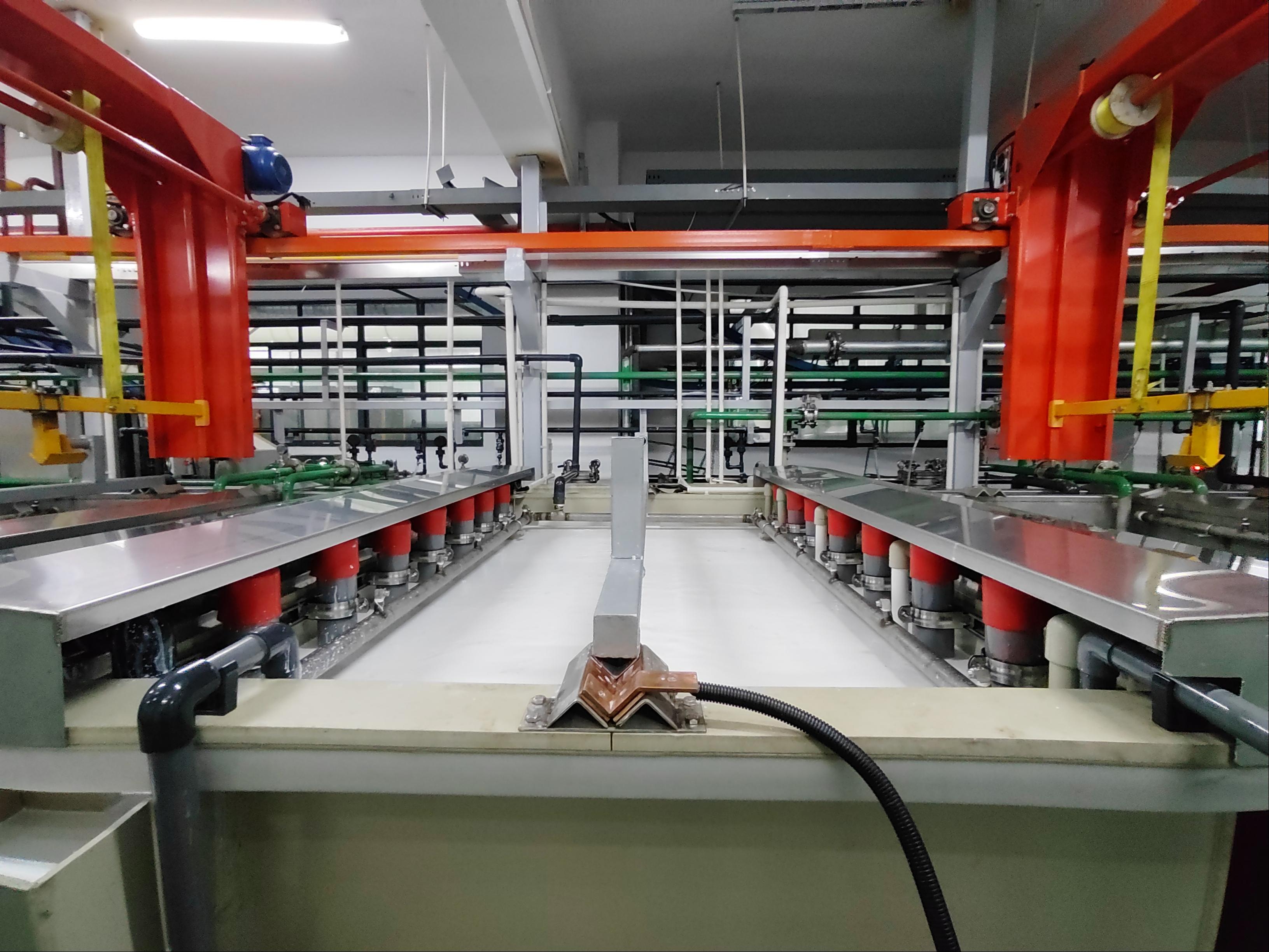
What Is Electrocoating (E-coat)?
Electrocoating, also known as CED (Cathodic Electrodeposition), is a process in which electrically charged paint particles are deposited out of a water suspension onto a conductive part under the influence of an electric field. Unlike conventional spray painting, e-coat provides uniform coverage even on complex geometries.
During the process, paint is applied at a film thickness regulated primarily by the applied voltage. A unique characteristic of electrocoating is that the deposition is self-limiting: as the deposited film insulates the part electrically, the deposition rate naturally slows down. Initially, paint solids deposit in areas closest to the counter electrode. As these areas become insulated, the electric field forces solids into more recessed, still-bare metal surfaces, ensuring complete coverage. This ability to coat inner cavities and hidden surfaces is known as throwing power, a critical performance indicator of any e-coat system.
Two main types of cathodic electrocoat are widely used, each suited to different application requirements.
|
Feature |
Cathodic Epoxy |
Cathodic Acrylic |
|
Corrosion resistance |
Excellent – the benchmark for salt spray, humidity, and cyclic corrosion |
Good, but slightly lower than epoxy |
|
UV durability |
Poor – requires topcoat when exposed to sunlight |
Excellent – can be used as a one-coat finish |
|
Chalking resistance |
Low (aromatic epoxy types chalk and degrade under UV) |
High |
|
Gloss & color retention |
Limited |
Wide range of glosses and colors available |
|
Typical applications |
Automotive, automotive parts, heavy-duty corrosion protection |
Agricultural, lawn & garden, appliances, air-conditioning, light-colored finishes |
|
Topcoat required? |
Yes, for outdoor exposure |
No (one-coat finish possible) |
Summary
• Choose cathodic epoxy when maximum corrosion protection is required, but plan for a topcoat in exterior applications.
• Choose cathodic acrylic when UV durability, color retention, or light-colored finishes are needed, especially on ferrous (steel) substrates.
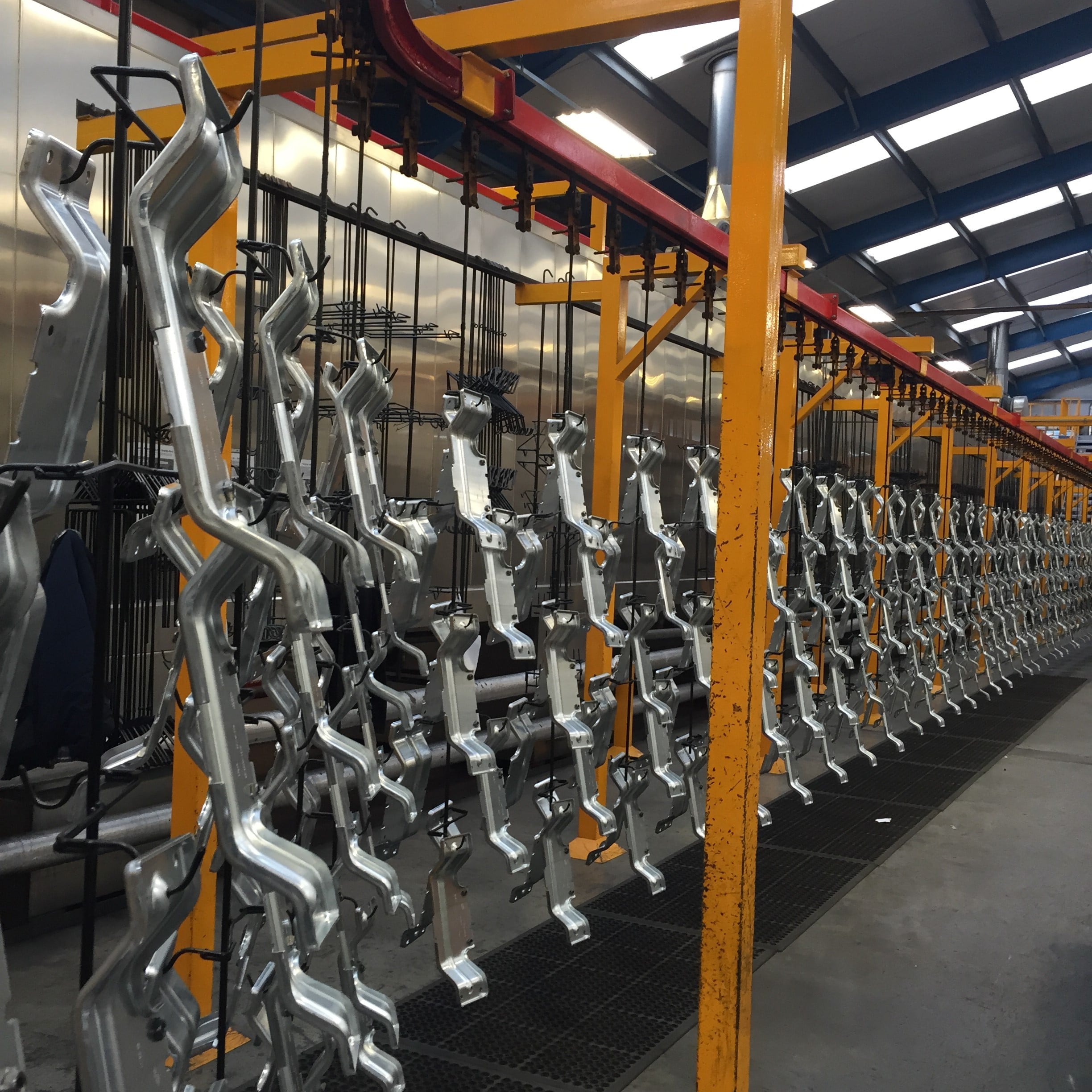
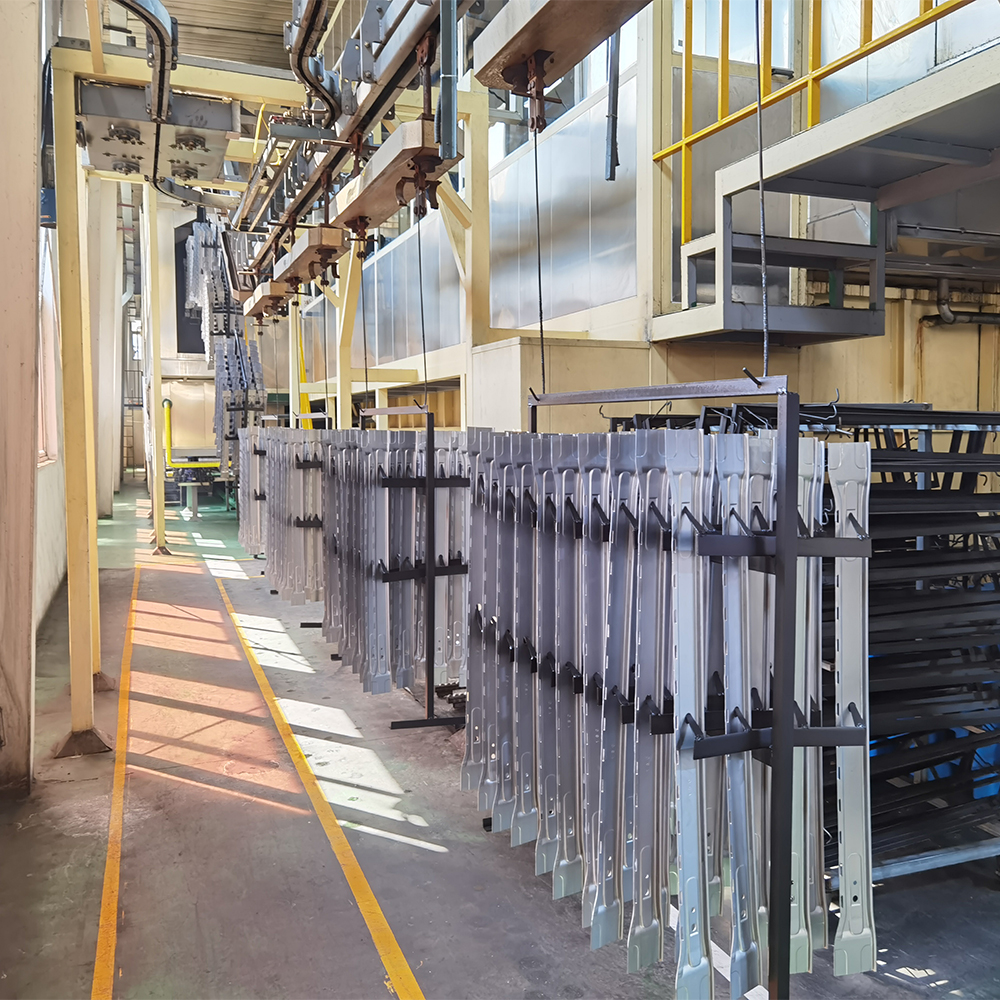
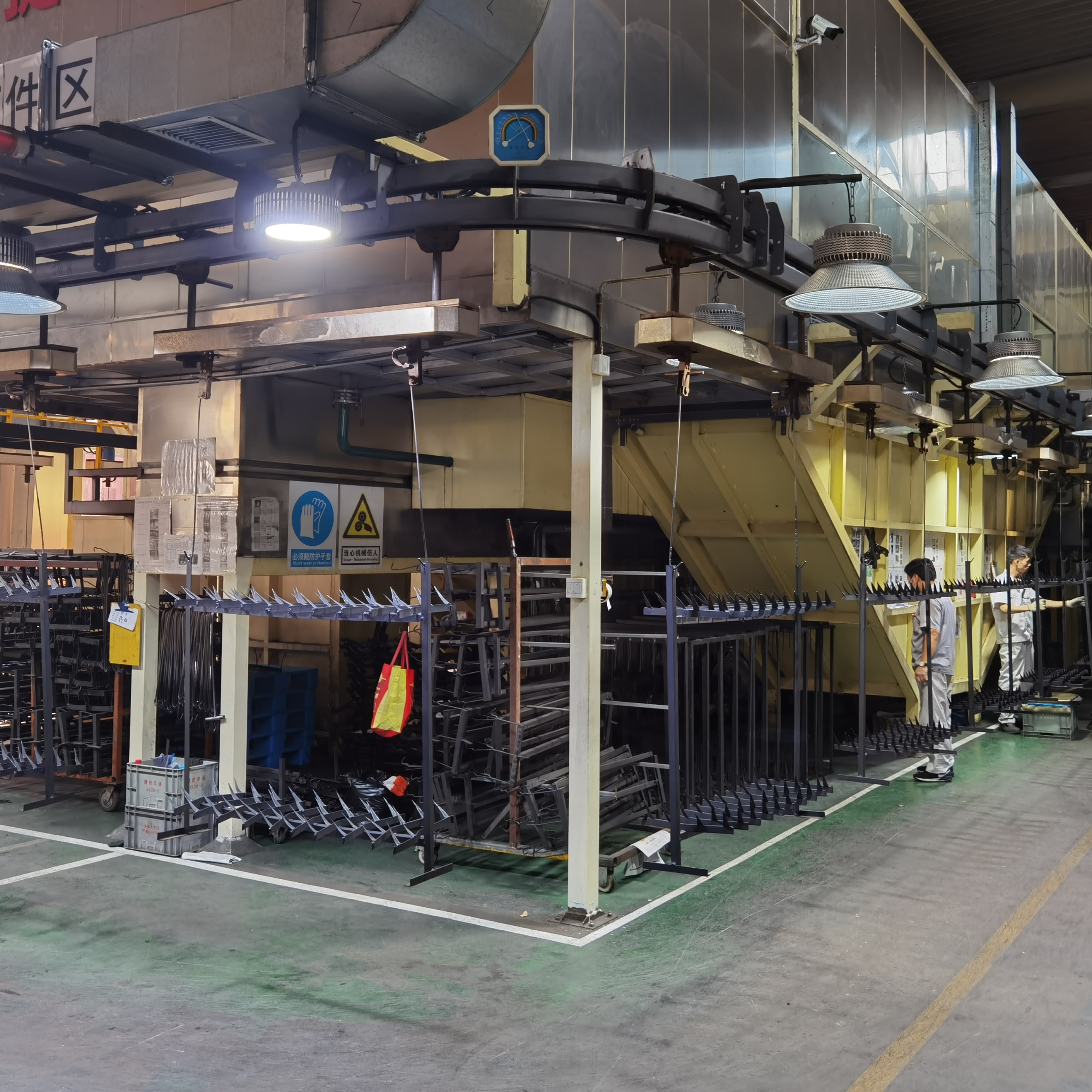
A complete electrocoating line consists of four main stages:
• Pretreatment – Cleaning and conversion coating to prepare the metal surface.
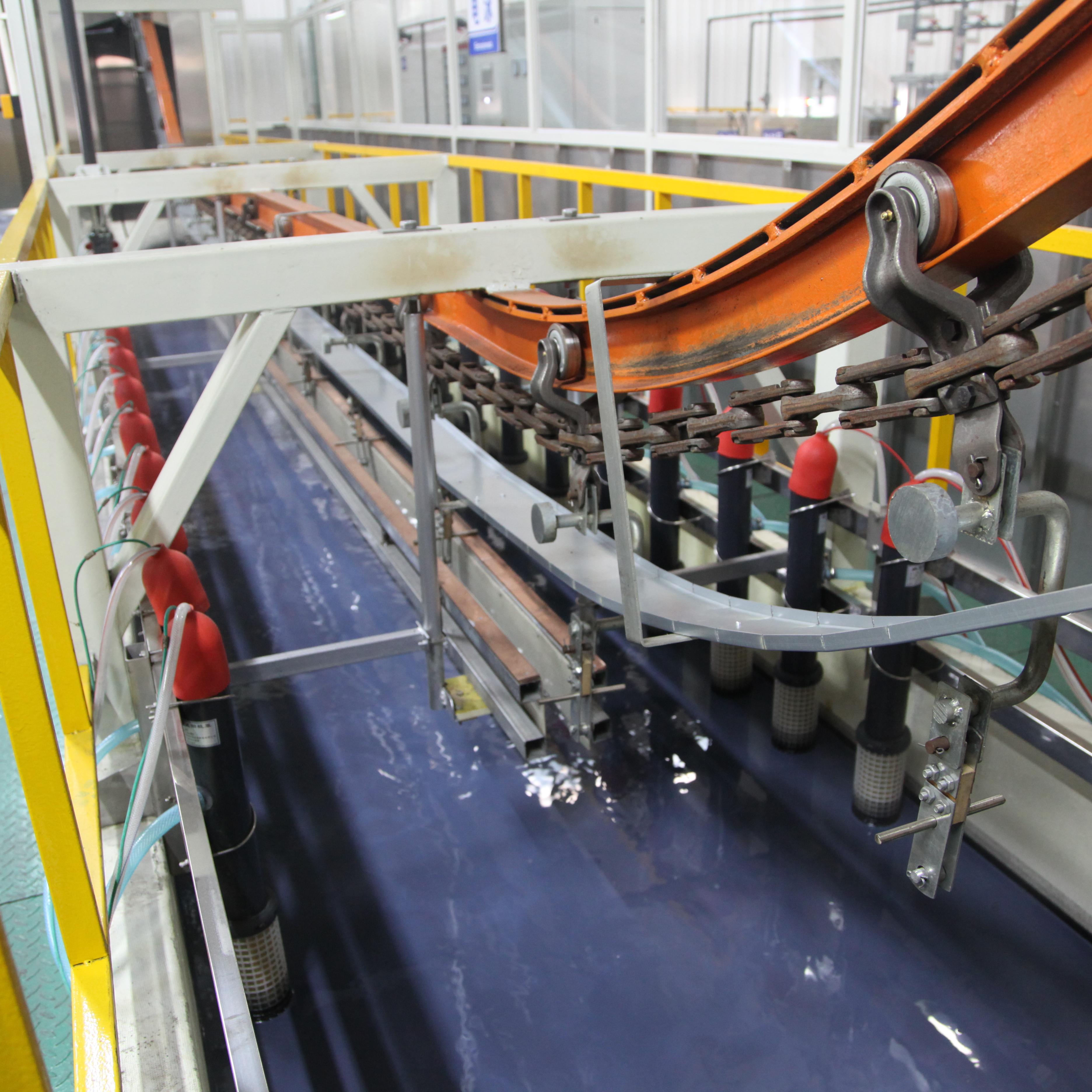
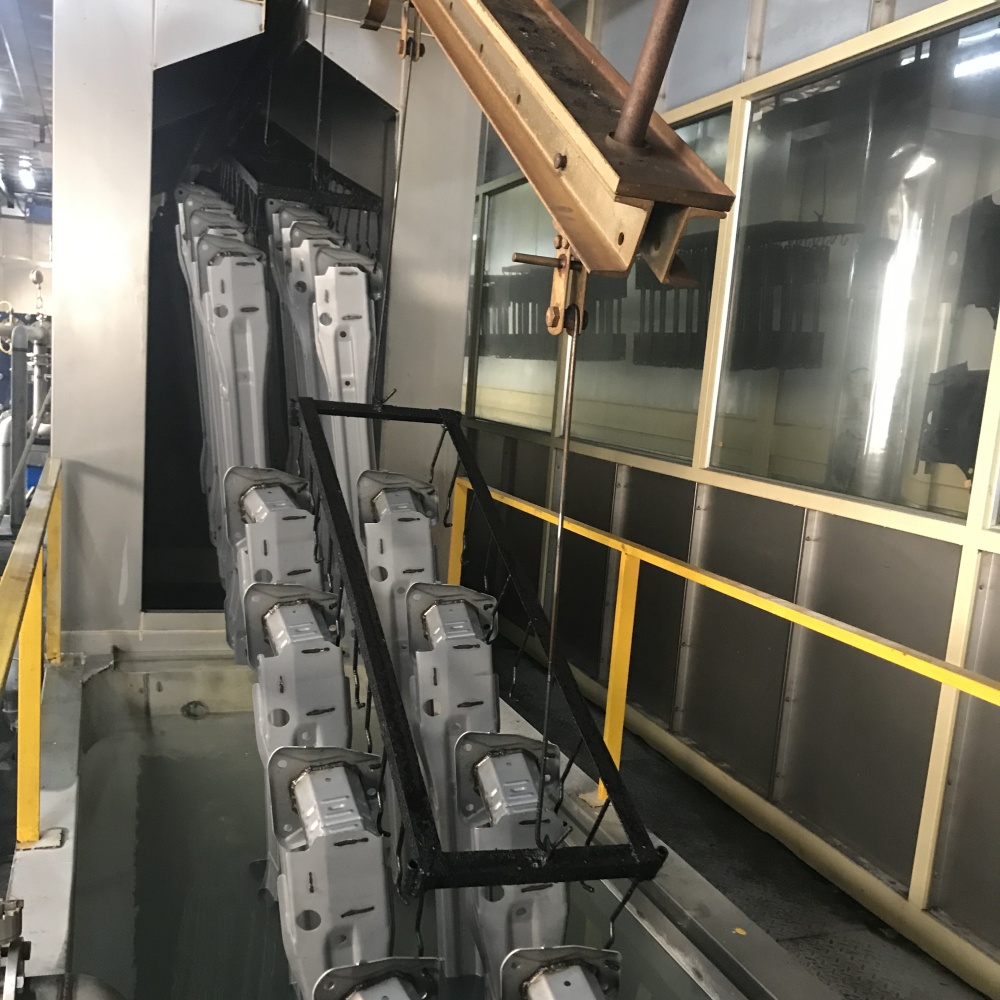
• E-coat tank and ancillary equipment – Immersion and electrodeposition in the paint bath.
• Post rinse – Typically using ultrafiltration (UF) to recover undeposited paint solids
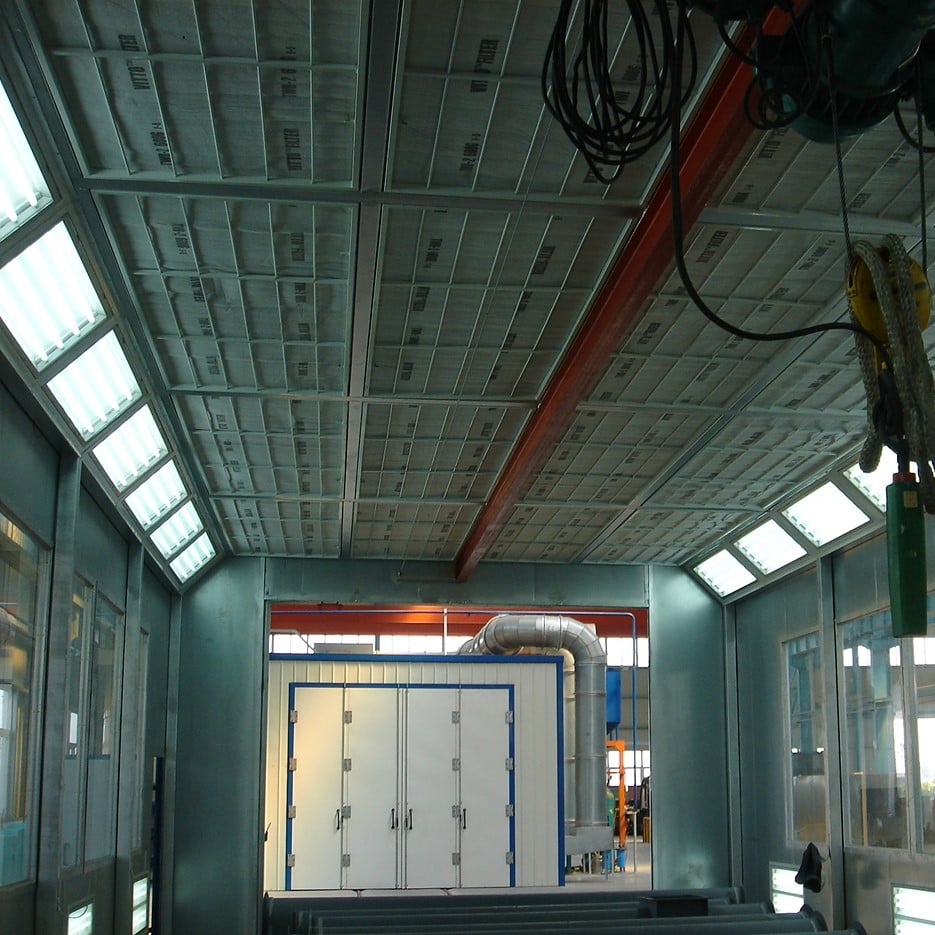
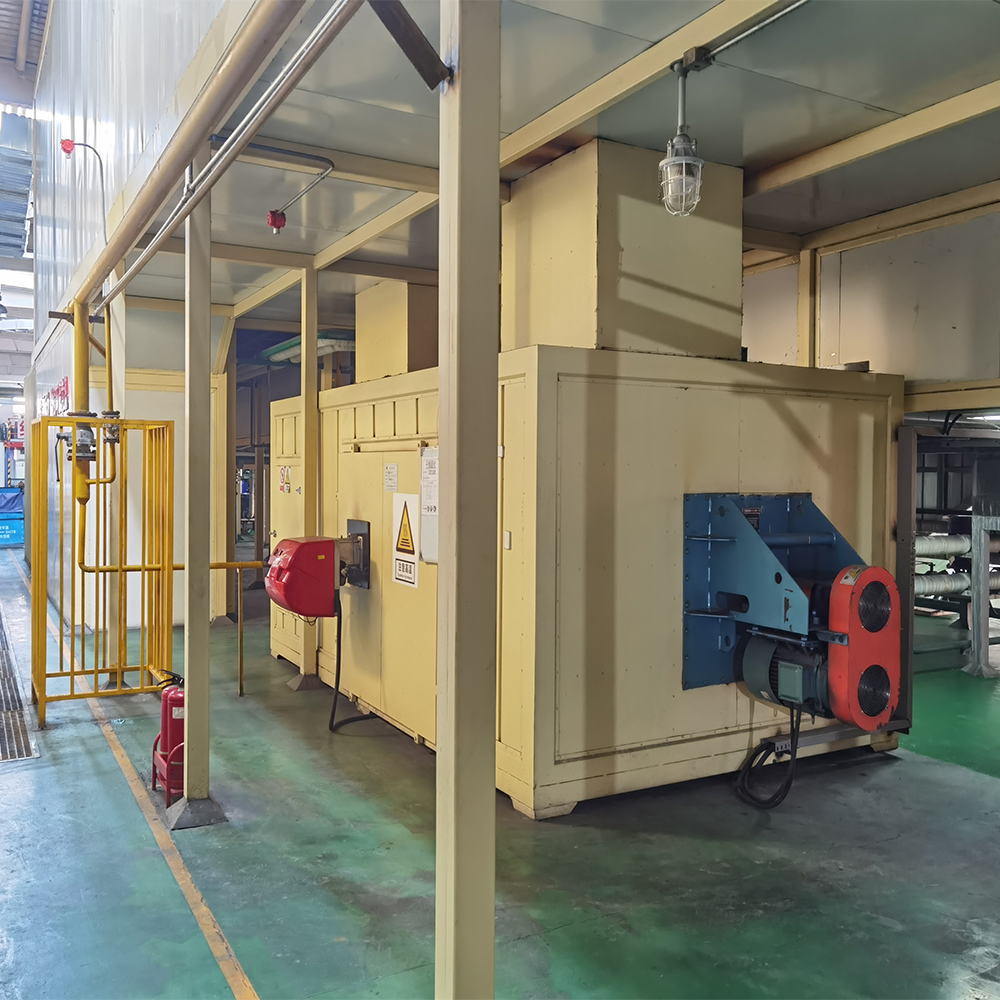
• Curing oven – Baking to crosslink and cure the deposited paint film.
In a typical sequence, parts are first cleaned and pretreated with a phosphate conversion coating. They are then dipped into the e-coat bath, where a DC current is applied between the parts (cathode) and counter electrodes (anode). Charged paint particles migrate to the part surface and deposit. After removal from the bath, parts are rinsed to reclaim excess paint solids, then baked to achieve final coating properties.
Prior to electrocoating, most metal surfaces must undergo a thorough pretreatment process, typically including a conversion coating. This ensures proper adhesion and corrosion resistance.
A standard pretreatment sequence for e-coat includes the following seven stages:
• Cleaning (one or more stages) – Removes oils, dirt, and metal fines.
• Rinsing – Removes residual cleaner.
• Conditioning (surface activation) - Prepares the metal surface for fine crystal formation during phosphating.
• Conversion coating - Applies a phosphate layer (iron or zinc phosphate).
• Rinsing – Removes excess phosphate solution.
• Post-treatment (seal rinse) - Enhances corrosion resistance and paint adhesion.
• Deionized (DI) water rinsing - Removes any conductive ions to avoid contamination of the e-coat bath.
Phosphating processes fall into two main categories: iron phosphate and zinc phosphate.
|
Aspect |
Iron Phosphating |
Zinc Phosphating |
|
Coating thickness |
Thinner |
Thicker |
|
Corrosion resistance |
Moderate |
Excellent |
|
Paint adhesion |
Good |
Superior |
|
Heavy metal content |
Low (no additional heavy metals) |
Contains zinc/nickel (environmental restrictions apply) |
|
Cost |
Lower |
Higher |
|
Typical use |
Where cost is prioritized over maximum performance |
High-performance applications, especially with e-coat |
Iron phosphate has traditionally been chosen when overall cost considerations override extreme performance needs. Because iron phosphate coatings are thinner and contain only the metal ion of the substrate being processed (i.e., iron from the steel part), they offer reduced corrosion protection compared to zinc phosphate. However, as environmental regulations on heavy metals become increasingly tight, an iron phosphate system combined with a thorough post-treatment can still meet many corrosion specifications, offering a viable and more eco-friendly alternative.
Zinc phosphate has become the preferred pretreatment in the metal finishing industry, particularly when paired with electrocoat systems. The reason is straightforward: under demanding conditions (e.g., high humidity, salt exposure, or cyclic corrosion), zinc phosphate provides significantly better corrosion resistance and paint adhesion than iron phosphate. For this reason, it remains the standard for automotive and heavy-duty industrial applications.

Copyright © 2025 Yangzhou OURS Machinery Co., Ltd.All rights reserved. - Privacy policy
 EN
EN