 EN
Designing an effective e-coating line requires careful attention to multiple technical and operational factors that directly impact product quality, throughput, and long-term profitability. An e-coating line represents a significant capital investment in automotive parts manufacturing, and the design phase determines whether that system will deliver consistent results or create ongoing production bottlenecks. The complexity of modern e-coating line systems means that manufacturers must understand how each component, process parameter, and material flow decision influences the final electrocoat deposit on parts. This guide explores the essential design considerations that automotive suppliers and manufacturers should evaluate when planning or upgrading an e-coating line.
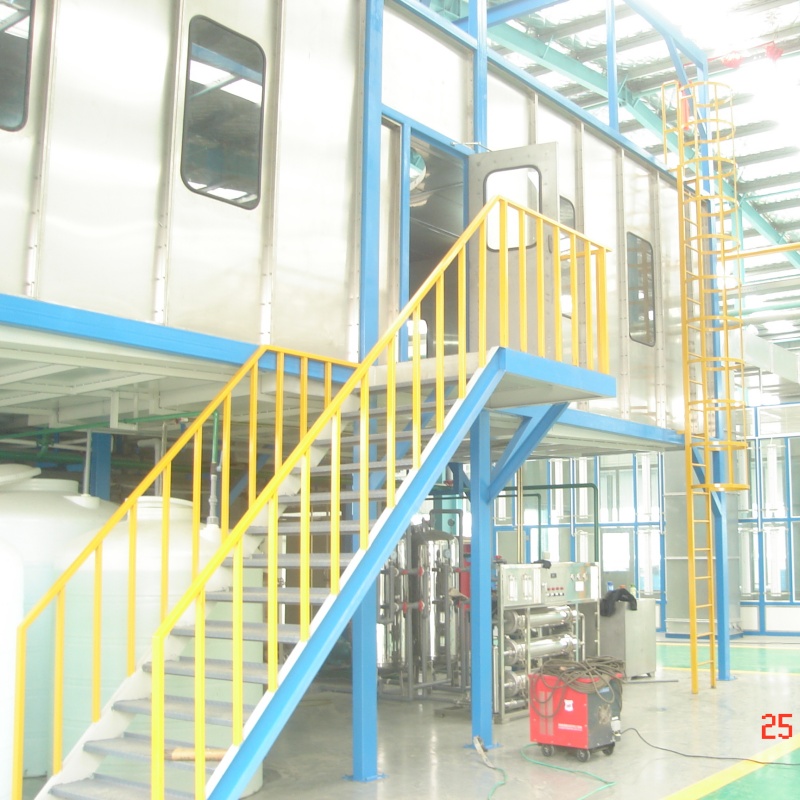
An e-coating line operates by applying a thin, uniform electrocoat layer onto metal parts through electrophoretic deposition. The overall performance and cost-effectiveness of an e-coating line depend heavily on how well the design accommodates pretreatment integration, material handling systems, tank configuration, power supply architecture, and environmental controls. When manufacturers fail to consider these interdependent factors during the design stage, they often face quality issues, excessive downtime, higher reject rates, or inability to meet customer specifications. Understanding what makes a robust e-coating line design separates organizations that achieve rapid payback and reliable production from those that struggle with chronic compliance and quality challenges.
Pretreatment Integration and Surface Preparation
Pretreatment as the Foundation of Coating Quality
The success of any e-coating line depends fundamentally on the quality of surface preparation before parts enter the e-coat tank. Pretreatment removes oils, oxides, contaminants, and mill scale that would otherwise prevent proper electrocoat adhesion and performance. When designing an e-coating line, the pretreatment section must be sized and sequenced to match the planned throughput and part geometry. An undersized pretreatment stage creates a bottleneck that reduces e-coating line capacity, while an oversized system wastes capital and floor space. The pretreatment chemistry, rinse water quality, and drying effectiveness directly influence coating defects, adhesion problems, and corrosion resistance once parts leave the e-coating line. Many automotive suppliers discover too late that their e-coating line suffers chronic performance issues because the pretreatment was designed as an afterthought rather than as an integral part of the overall e-coat line strategy.
Water Management in the e-coating line Environment
Pretreatment systems generate significant water volumes, and how that water is managed affects both the e-coating line operating costs and the quality of the electrocoat applied downstream. Recycled rinse water carries dissolved salts and residual chemistry that can contaminate the e-coat tank if cross-contamination occurs. An effective e-coating line design includes dedicated rinse water treatment, monitoring, and disposal pathways that prevent contaminant buildup in the coating bath. The final rinse stage before the e-coating line entrance is critical; deionized or highly purified water in this stage protects the e-coat tank chemistry from degradation. Manufacturers should specify water conductivity limits, ion-exchange resin replacement schedules, and rinse tank circulation rates as part of the e-coating line design documentation. Poor water management transforms what should be a reliable e-coating line into a source of unpredictable coating quality and frequent tank maintenance interventions.
Tank Configuration and Material Flow Dynamics
E-Coat Tank Design for Uniform Coverage
The e-coating line tank itself is not a simple container; it is a precision electrochemical reactor where part geometry, tank volume, electrode placement, and flow dynamics interact to determine coating thickness and distribution. An e-coating line tank must be sized to accommodate the planned part volume per hour without forcing excessive part density that causes shielding and uneven deposit. Electrode configuration within the e-coating line tank influences current distribution and coating uniformity; poor electrode design causes thick deposits in some areas and thin, weak coatings in others. The tank walls, bottom, and internal structures must be constructed from materials that resist electrocoat chemistry and allow for proper circulation and filtration access. When designing an e-coating line, manufacturers often underestimate the importance of tank geometry on final coating quality. A well-designed e-coating line tank enables parts to receive consistent electrocoat coverage across complex geometries, tight tolerances, and intricate internal cavities that characterize modern automotive components.
Part Handling and Conveyor Integration
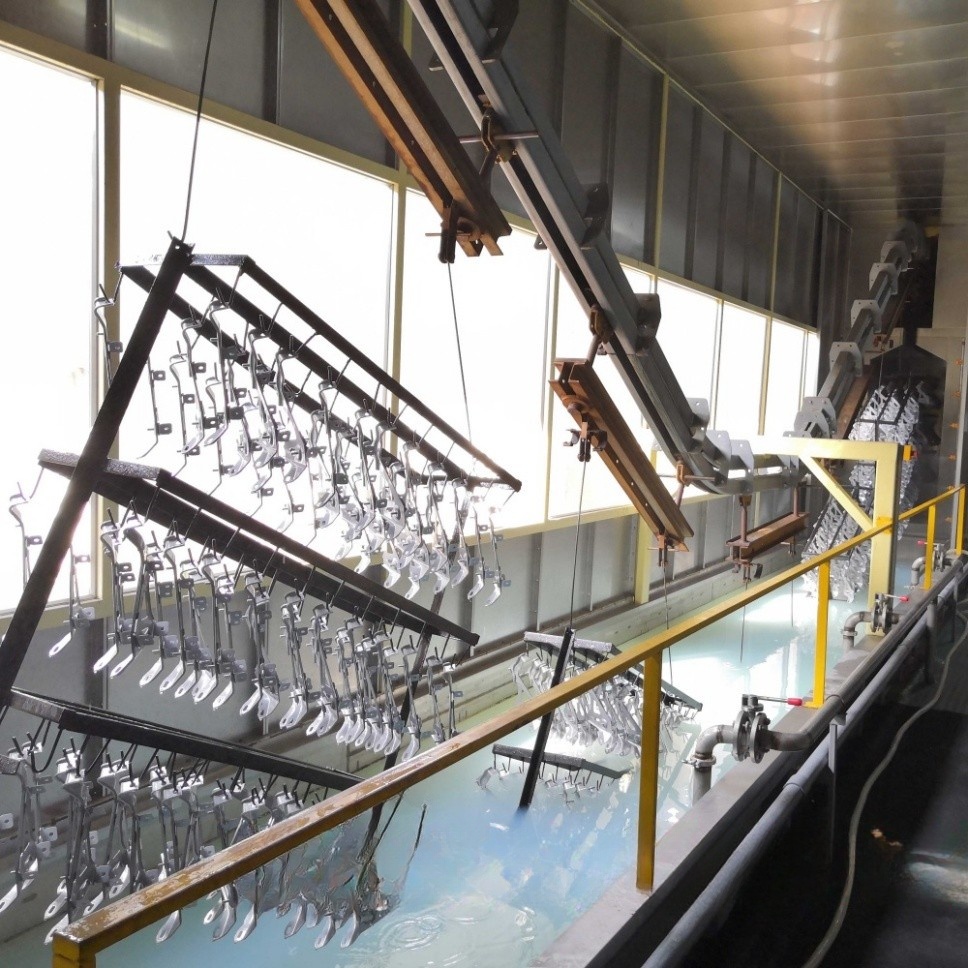
The mechanical system that moves parts through the e-coating line must maintain consistent immersion time, prevent part-to-part contact that creates coating voids, and withstand the corrosive environment created by electrocoat chemistry and rinses. An e-coating line conveyor system typically includes fixturing, jigging, or basket carriers that hold parts at precise angles to ensure full coverage of critical surfaces. The speed of the e-coating line conveyor is calibrated to allow sufficient electrodeposition time while maintaining target throughput; a conveyor that moves too quickly produces thin, incomplete coatings, while one moving too slowly reduces overall e-coating line productivity and increases operating costs. Drainage and material flow within the e-coating line must be optimized so that parts drain properly after exiting the e-coat tank, preventing paint sludge accumulation and reducing waste. Chain systems, electrical contacts, and guide rails in the e-coating line environment require regular maintenance and occasional replacement due to the aggressive chemistry, so design should include accessible inspection points and serviceability in mind.
Power Supply, Current Control, and Electrical Architecture
Rectification and Current Delivery Systems
An e-coating line requires a rectifier system that converts AC power to DC and delivers precisely controlled current to the electrocoat bath at stable voltage and amperage levels. The rectifier capacity must match the planned production rate and the electrical demand of the e-coating line based on part size, desired coating thickness, and tank size. Modern e-coating line systems often employ multiple independent rectifier modules that work in parallel, providing redundancy so that partial equipment failure does not shut down the entire e-coating line. Current distribution uniformity depends on proper bus bar sizing, contact placement, and the conductive path through the e-coat bath; undersized power distribution creates voltage drops that produce inadequate coating in distant tank zones. The rectifier and electrical architecture of an e-coating line must comply with automotive quality standards, provide real-time monitoring of voltage and amperage, and include safeguards against ground faults and electrical hazards. A poorly specified e-coating line electrical system leads to inconsistent coating quality, equipment damage, and increased downtime during troubleshooting.
Monitoring and Adaptive Control in the e-coating line
Modern e-coating line systems incorporate sensors and controls that monitor bath chemistry, temperature, conductivity, and electrical parameters in real time. An advanced e-coating line can automatically adjust rectifier output, conveyor speed, or bath chemistry to compensate for minor deviations that would otherwise degrade coating quality. Real-time feedback from the e-coating line enables operators to detect emerging problems such as anode corrosion, electrode fouling, or chemistry imbalance before they cause widespread defects. The control system of an e-coating line should provide historical data logging for traceability and continuous improvement analysis; this documentation supports automotive quality audits and helps identify chronic performance patterns. Investment in robust monitoring and control architecture elevates an e-coating line from a basic paint system to an intelligent manufacturing asset that consistently meets tight customer specifications and supports lean continuous improvement initiatives.
Environmental Control, Safety, and Compliance
Ventilation, Fume Management, and Worker Protection
The electrocoat process and associated rinse stages generate volatile organic compounds (VOCs), mists, and fumes that must be controlled to protect worker health, comply with environmental regulations, and maintain product quality. An e-coating line design must include dedicated ventilation, capture hoods, and fume extraction systems sized for the actual off-gassing rates generated by the e-coat tank and rinse stations. Inadequate ventilation in an e-coating line creates hazardous air quality, potential regulatory violations, and increased employee health risk; it also allows airborne contamination to settle on parts and fixtures, degrading coating quality. The exhaust from an e-coating line typically requires treatment such as mist elimination, carbon adsorption, or catalytic oxidation before release to the atmosphere; these treatment systems add capital cost and ongoing operating expense but are essential for legal compliance and environmental stewardship. Safety considerations in the e-coating line include electrical hazards from high-voltage systems, chemical exposure risks, and confined-space protocols when servicing tanks or electrodes. Design of an e-coating line should incorporate lockout-tagout provisions, safety interlocks, personal protective equipment requirements, and operator training protocols to minimize incident risk.
Bath Chemistry Management and Disposal
The electrocoat chemistry in an e-coating line tank deteriorates gradually as parts pass through, extracting ions, consuming active ingredients, and accumulating contaminants. An effective e-coating line design includes a comprehensive bath management plan covering testing frequency, additive replenishment schedules, waste sludge removal, and periodic tank drains and recharges. The e-coating line operator must monitor coating thickness measurements, gloss, and adhesion to detect when bath performance is declining and intervention is needed. Ultrafilter systems in modern e-coating line installations remove sludge and fine particles without disrupting the chemistry, extending bath life and reducing disposal frequency. Waste disposal from an e-coating line must comply with local hazardous waste regulations; the e-coat bath contains heavy metals, organic compounds, and other regulated materials that cannot be released into municipal sewers. Planning for proper waste handling during the e-coating line design phase reduces surprises and ensures the facility can operate legally and sustainably. A well-managed e-coating line chemistry program minimizes defects, extends bath life, reduces operating costs, and demonstrates environmental and safety commitment to automotive customers.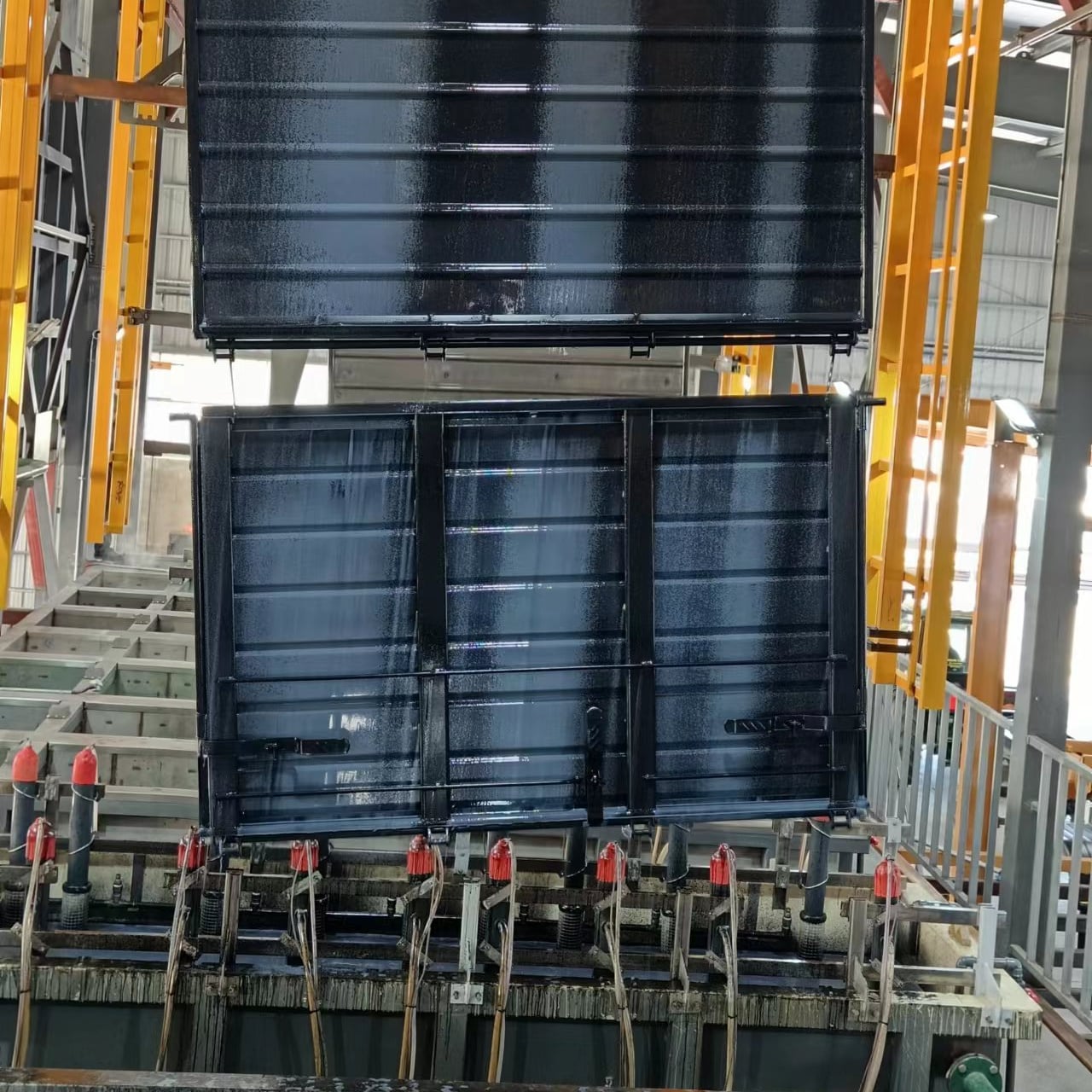
FAQ
What electrical specifications should I specify for my e-coating line?
Your e-coating line rectifier should deliver stable DC voltage typically ranging from 50 to 400 volts, with current capacity matched to your tank size and planned throughput. Specify multiple independent rectifier modules for redundancy, real-time monitoring of voltage and amperage, and compliance with automotive electrical standards such as ISO or OEM-specific requirements. Consult with your e-coating line equipment supplier to calculate the required kilowatt capacity based on part size, coating thickness targets, and production rate.
How often should the bath chemistry in an e-coating line require replacement?
An e-coating line bath typically lasts 6 to 18 months depending on production volume, part complexity, contamination control effectiveness, and chemistry management practices. Regular testing of bath conductivity, coating thickness, and adhesion helps predict when your e-coating line tank requires draining and recharging. Many facilities implement ultrafilter systems that extend e-coating line bath life by removing sludge while preserving active chemistry, reducing disposal frequency and operating costs.
What throughput rate should I design into my e-coating line system?
Your e-coating line throughput design should account for immersion time needed to achieve target coating thickness, which typically ranges from 15 to 45 seconds depending on part geometry and coating specification. An e-coating line conveyor speed is then calculated to deliver that dwell time while meeting your production volume target in parts per hour. Avoid oversizing the e-coating line tank and conveyor system, as this increases capital cost and operating expense; conversely, an undersized e-coating line becomes a production bottleneck that limits overall facility output and profitability.