
 EN
EN
How Electrostatic Powder Coating Works: Core Physics and Mechanism
Electrostatic Charging & Grounding: The Attraction Principle
The whole thing starts with electrostatic charging, which basically makes those uniform finishes possible in powder coating applications. When the powder goes through the spray gun, it picks up a negative charge either from corona discharge or when rubbing against surfaces inside the equipment. Meanwhile, whatever we're coating stays grounded and becomes positively charged. This creates an attractive force between them so the powder sticks evenly on the part's surface. Sagging, drips, and all that mess just don't happen as much this way. Grounding matters a lot though. If something goes wrong with grounding, then we get problems like bad adhesion, inconsistent coating thickness, or worse yet, getting rejected during quality checks. What makes this method special is how the electrical forces work over the whole conductive area including hard to reach corners and edges. That's why transfer efficiency gets so high, usually above 95%, and we can control the coating thickness pretty precisely between about 60 to 120 micrometers. For complicated industrial components, this really works well. Another big plus compared to traditional liquid coatings? No need for solvents means no volatile organic compounds coming out during application. That cuts down both environmental impact and what we spend on cleaning up afterward.
Corona vs. Triboelectric Charging: Methods Used in Industrial Lines
In industrial settings, there are mainly two ways to get electrostatic charges going on production lines: corona and triboelectric methods. Each approach works differently and has its own set of pros and cons depending on what needs to be done. With corona charging, they basically run a high voltage electrode (usually somewhere between 30kV and 100kV) which makes the air around it ionize. These ions stick to the powder particles as they pass by. The good news about this method is that it's pretty tough, doesn't cost too much money, and works great for fast moving lines dealing with flat or somewhat curved parts. However, it does have downsides like creating ozone and sometimes causing problems with back-ionization when working on parts with deep grooves or sharp corners. Triboelectric charging takes another route altogether. When powder moves through a non-metallic tube, say one made of PTFE material, the friction causes electrons to jump around, giving the particles a negative charge. What makes this interesting is that it doesn't produce any ozone at all, plus it wraps around complex shapes better than most other methods. Think things like car suspension parts or those complicated housing units for heating systems. The coating sticks better in tight spots where regular methods might struggle. Sure, tribo systems need more attention to detail regarding the powder mix and regular cleaning of equipment, but manufacturers keep gravitating toward these setups because of how well they handle detailed component work in precision manufacturing environments.
The Electrostatic Powder Coating Line Process Flow
Pretreatment, Transfer, and Electrostatic Spray Application
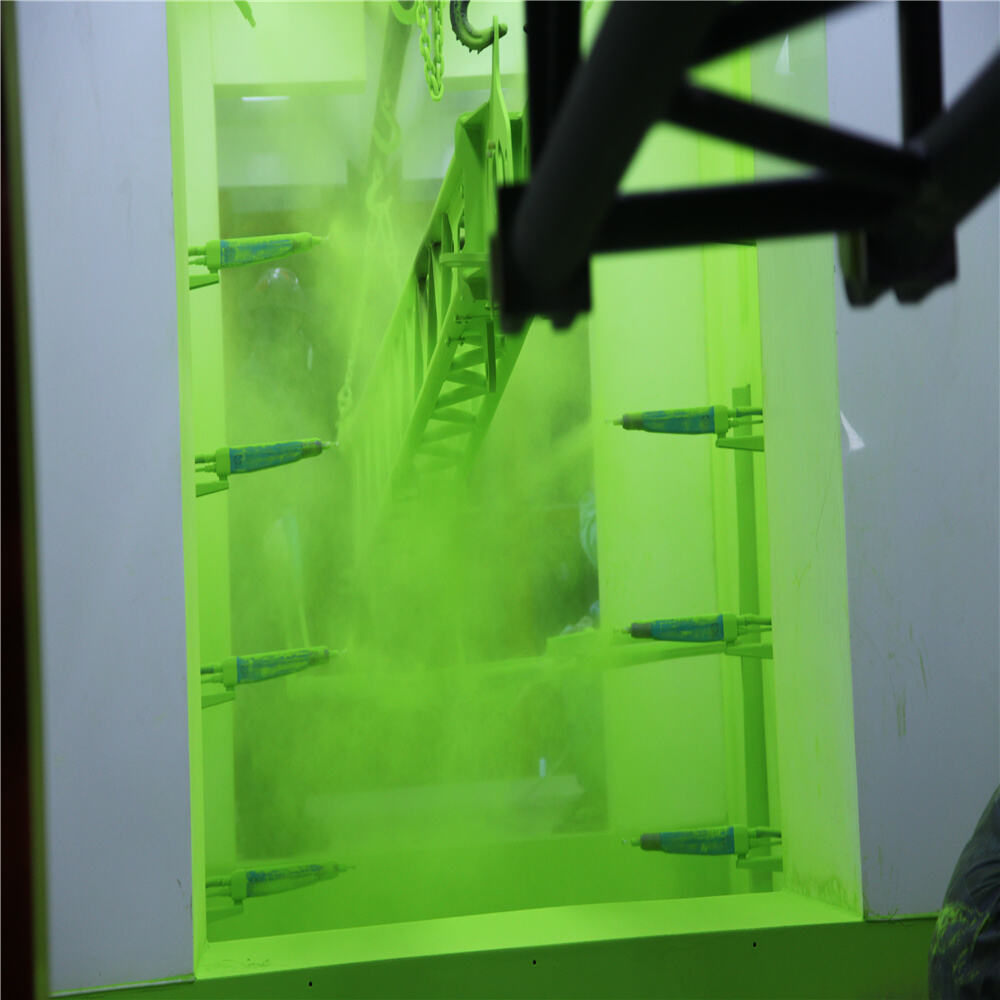
Getting the surface ready properly makes all the difference when it comes to how well coatings hold up over time. The pretreatment process in electrostatic powder coating lines gets rid of oils, oxides, and dirt through steps like alkaline cleaning, acid etching, and using conversion coatings based on zirconium or titanium. These steps stop around 90% of problems with coatings not sticking properly. After pretreatment, parts travel along conveyors into enclosed spray booths for application of the electrostatically charged powder. Both corona and tribo guns work by having the grounded part pull in the powder particles evenly across its surface, which helps create a uniform film thickness while keeping overspray to a minimum. What happens next? The leftover powder from overspray gets filtered out and put back into the system for reuse, which saves materials and cuts down waste significantly in production environments.
Curing, Cooling, and Quality Inspection Stages
Once applied, parts need to go through curing ovens heated to around 180 to 200 degrees Celsius for roughly 10 to 20 minutes. The exact time depends on how heavy the base material is and what kind of polymer was used. At this point, those thermoset resins like epoxy, polyester stuff, or sometimes combinations of both start doing their thing. They basically link up permanently, creating that tough outer layer which stands up against chemicals pretty well. After heating comes the cooling down part, which has to be done carefully so things don't warp or crack, especially when dealing with thin materials or parts made from different metals joined together. Once everything cools properly, there's an inspection step where they check if all the specs were met and whether anything went wrong during processing.
- Coating thickness (using eddy-current or magnetic induction gauges),
- Adhesion strength (per ASTM D3359 cross-hatch test),
- Visual integrity (absence of orange peel, pinholes, or cratering).
This end-to-end discipline supports >95% transfer efficiency and cuts rework by 40% versus liquid paint systems.
Why Manufacturers Choose Electrostatic Powder Coating Lines
Environmental Benefits: Near-Zero VOCs and Material Efficiency
Electrostatic powder coating systems really fit well with what's happening globally regarding sustainability requirements, especially those set by the EPA and EU REACH standards. These systems get rid of solvents completely, which means almost no VOCs are released into the air. That makes getting air permits for facilities much easier and cuts down on all the dangerous waste problems that come from trying to recover or dispose of solvents. Most setups can catch over 95% of overspray, so companies can actually reuse this collected powder again and again without it losing quality in standard applications. What this does is cut way back on how much raw material gets used up, reduces what ends up in landfills, and shrinks the carbon impact for each finished product. For businesses focused on their environmental responsibilities, this kind of system helps them meet their circular economy targets while making their ESG reports look better too.
Performance Gains: Durability, Corrosion Resistance, and Finish Consistency
Manufacturers adopt electrostatic powder coating not just for compliance but for measurable product enhancement. The cured thermoset film forms a dense, chemically bonded barrier that significantly outperforms conventional liquid coatings in real-world service conditions:
- Durability: Superior resistance to abrasion, impact, UV fading, and thermal cycling—validated per ISO 20344 and ASTM G154;
- Corrosion resistance: With proper pretreatment, salt-spray performance exceeds 1,000 hours (ASTM B117) on steel substrates;
- Finish consistency: Electrostatic attraction ensures uniform coverage—even on Faraday cage areas—eliminating runs, sags, and dry spray.
These attributes collectively reduce field failures, lower warranty claims, and cut rework by 30–40%, directly improving throughput, yield, and brand reputation.
FAQ
What is electrostatic powder coating?
Electrostatic powder coating is a method of applying a protective and decorative finish on surfaces using powdered paint. The powder is electrostatically charged and sprayed onto grounded surfaces and cured to form a hard, durable coating.
How does the coating process work?
The process involves several steps including pretreatment to clean and prepare the surface, applying the powder with electrostatic spray guns, and curing the coated item in an oven to form a solid film.
What are the benefits of using electrostatic powder coating?
This method offers numerous benefits including environmental friendliness due to the absence of VOCs, improved efficiency, and performance with high transfer efficiency rates, and enhanced durability and corrosion resistance of the finished product.
What is the difference between corona and triboelectric charging?
Corona charging uses high voltage to ionize air and charge the powder particles, while triboelectric charging uses friction to generate a charge. Each has its advantages and applications based on the complexity and requirements of the parts being coated.