
 EN
EN
Core Physics: How Electrostatic Charge Enables High-Transfer Efficiency
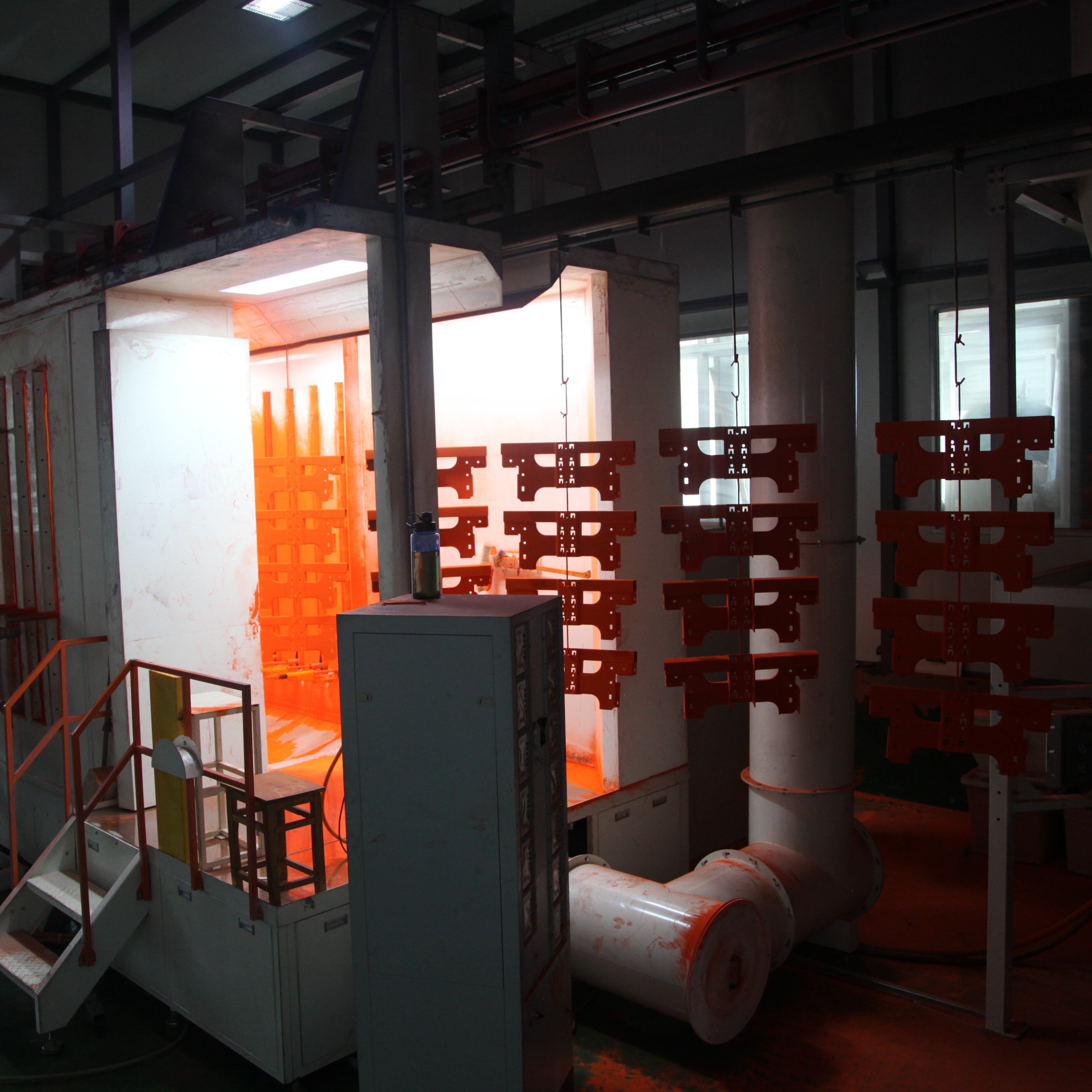
The electrostatic powder coating process works on basic physics principles, mainly Coulomb's Law, which helps get better results when applying coatings. When we apply the powder, the particles pick up a negative charge through either friction or electrical means. Once charged, these particles are attracted to whatever object is grounded, so they stick to surfaces instead of floating around as much as they would with regular spraying techniques. The difference in performance is pretty significant actually. According to industry standards, most electrostatic setups manage to transfer between 70 and 90 percent of the material onto the target surface. That's way better than traditional spray methods which typically only hit about 30 to 40 percent efficiency according to recent studies from Ponemon in 2023.
Electrostatic Attraction and Faraday Cage Effect Mitigation in Powder Deposition
Electrostatic fields create what's called the wrap around effect, which lets charged particles bend around corners and get into those hard to reach spots. But there's a problem when dealing with really deep holes or closed off shapes. These areas tend to become Faraday cages basically electric dead zones where the coating just doesn't stick properly, leaving patches or gaps entirely. Industry has come up with several ways to tackle this issue over time. Some shops optimize their grounding setups, others adjust voltages dynamically depending on where they're working, especially reducing kilovolts in detailed sections. Specialized spray nozzles also help direct the electric field better. According to numbers from the Powder Coating Institute, these methods cut down on those annoying Faraday cage problems by roughly 60 percent across most manufacturing environments today.
Charge-to-Ground Dynamics and the Critical Role of Part Grounding and Gun Voltage Optimization
Reliable deposition depends on an unbroken conductive path from spray gun to part to ground. Inadequate grounding causes charge accumulation on the part, triggering back ionization and repelling incoming powder. Key optimization levers include:
- Ground resistance maintained below 1 megaohm (per ASTM D514 verification)
- Voltage stability within ±5% (vs. ±30% in non-optimized setups)
- Consistent gun-to-part distance of 6–8 inches, enforced via automated reciprocators
| Parameter | Non-Optimized | Optimized | Impact |
|---|---|---|---|
| Ground Resistance | >2 MΩ | <1 MΩ | 40% fewer rejects |
| Voltage Stability | ±30% | ±5% | 25% powder savings |
| Gun Distance | Variable | Fixed ±1" | 15% thickness uniformity gain |
When paired with closed-loop recovery systems—which reclaim and reuse over 95% of overspray—well-tuned electrostatic lines routinely achieve first-pass transfer rates exceeding 85%, minimizing rework and material cost.
Material Savings: Quantifying Overspray Reduction and Powder Consumption Gains
Electrostatic powder coating delivers substantial material savings—not just through higher transfer efficiency, but via systemic waste reduction across the application and recovery cycle.
Transfer efficiency benchmarks: Electrostatic vs. conventional spray (60–90% vs. 30–40%)
Electrostatic coating systems typically hit around 60 to 90 percent transfer efficiency, which is actually more than twice what we see with regular liquid spray methods that usually manage only 30 to 40 percent. Why does this happen? Well, it all comes down to how these systems work. When particles get charged, they're naturally attracted to grounded surfaces where they stick instead of bouncing off or floating around in the air. Manufacturers report saving about 30 to 50 percent on powder materials when switching to electrostatic systems. These savings translate into real cost reductions for most production facilities over time.
Real-world impact: 30–40% powder reduction in automotive OEM electrostatic powder coating systems
Automotive OEMs report 30–40% lower powder usage after transitioning to optimized electrostatic systems with integrated recovery. For example, a plant coating 50,000 assemblies monthly cuts annual powder purchases by 120+ metric tons—translating to ~$600,000 in savings at $5,000/ton. These gains stem from two interdependent factors:
- Stronger adhesion, minimizing initial overspray
- Closed-loop recovery, reusing 95%+ of what does overspray
Together, they reduce raw material demand while aligning with sustainability goals—cutting both cost and environmental footprint.
Uniform Coverage on Complex Parts: Leveraging the Wrap-Around Effect
Enhanced recessed, backside, and low-field-area coverage via electrostatic field wrapping
The electrostatic powder coating process works wonders for complicated parts since the charged particles actually adapt to whatever shape they're coating. When these tiny charged bits come out of the spray gun, they basically dance along electric fields that snake around corners, get into tight spaces, and even find their way behind those tricky flange areas where regular spray just can't reach. This whole scientific phenomenon means we get pretty much even coating thickness on things like metal tubes, brackets, and other complicated shapes without having to keep moving them around manually. Car makers have noticed something interesting too - places prone to rust like door hinges and engine mounts are now getting almost full coverage, which wasn't happening before because those spots used to be hidden from the spray. Getting rid of these dead zones cuts down on touch-up work by about 40 percent according to some studies, and it also gives better protection against corrosion over time on every surface of the part.
Operational Advantages: Throughput, Rework Reduction, and Closed-Loop Recovery Synergy
Faster Line Speeds and Consistent Film Build Enabling Higher Throughput in High-Volume Plants
Electrostatic systems can boost line speeds by around 30 to 40 percent compared to regular methods, and still deliver good quality results. When particles stick instantly to grounded surfaces, they create a fast and even coating layer. This means shops need about half as many spray passes when working on cars. Workers get through their daily tasks quicker but still hit those tight specs that matter so much for production goals. The finish stays intact too, which is pretty important when trying to keep up with demand without ending up with defective products.
Lower Rework Rates Driven by Improved Coating Uniformity and Edge Coverage
Facilities that switch to electrostatic systems often see rework costs fall around 25%. This happens because edges get better coverage and those pesky Faraday cage issues are handled more effectively. The wrap around effect means even tricky spots like recesses and overlapping areas get properly coated. Stable voltage settings and good grounding work together to stop problems such as orange peel texture or back ionization effects. Plants that also implement closed loop recovery systems can reclaim over 95% of what gets sprayed too much, so they end up with rejection rates below 1%. Putting together accurate coating methods with smart waste management cuts down on expenses, boosts production quality, and is easier on the environment overall.
FAQ
What is the electrostatic powder coating process?
The electrostatic powder coating process involves applying negatively charged powder particles to a grounded surface. These particles are attracted to the surface, resulting in higher transfer efficiency compared to traditional methods.
How does the electrostatic process improve material efficiency?
Electrostatic coating achieves 60-90% material transfer efficiency compared to 30-40% with conventional spraying. This efficiency stems from charged particles adhering better to grounded surfaces, reducing waste.
What are the benefits of using electrostatic systems on complex parts?
Electrostatic coating provides uniform coverage on complex and recessed areas due to the wrap-around effect, significantly reducing touch-up work and enhancing protection against corrosion.
Table of Contents
- Core Physics: How Electrostatic Charge Enables High-Transfer Efficiency
- Material Savings: Quantifying Overspray Reduction and Powder Consumption Gains
- Uniform Coverage on Complex Parts: Leveraging the Wrap-Around Effect
- Operational Advantages: Throughput, Rework Reduction, and Closed-Loop Recovery Synergy
- FAQ