
 EN
EN
Understanding Electrostatic Deposition Challenges on Complex Geometries
Faraday Cage Effect and Shadowing in 3D Workpieces
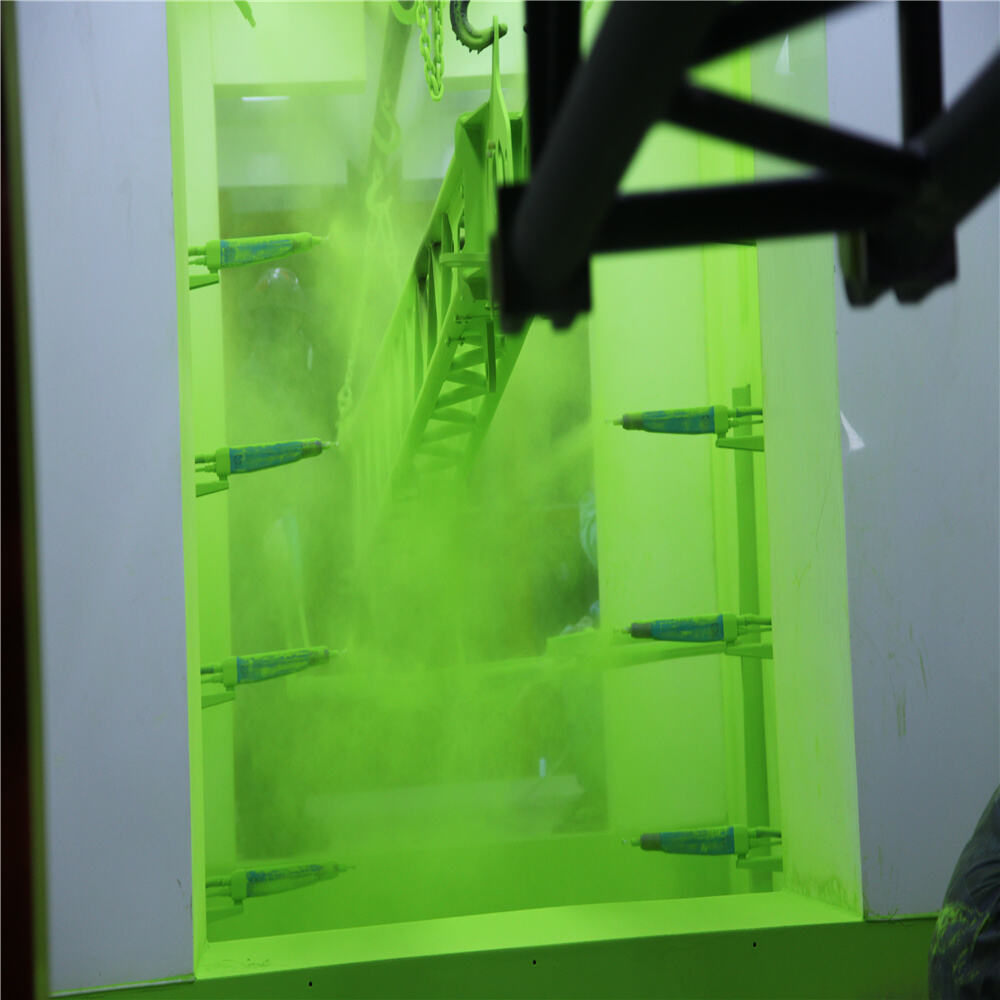
When dealing with complex 3D parts like heat exchangers or car frames, the Faraday cage effect really gets in the way of proper powder deposition inside those hard to reach corners and cavities where electrostatic fields just can't get through. What happens is these shadowed spots end up with way less coverage than they should have. According to some industry numbers from last year, the efficiency plummets somewhere between 30 and 50 percent when compared to regular flat surfaces. There are actually some good workarounds though. Putting the spray guns in strategic positions combined with adjusting the voltage fields while things are happening seems to help reinforce those tricky areas without messing up the edges that are already getting enough coating.
How Surface Curvature and Recess Depth Reduce Electrostatic Powder Coating System Efficiency
The shape of surfaces plays a major role in how electric fields spread out and how particles behave during coating processes. When parts have tight corners under about 5mm radius or deep pockets over 15mm depth, they mess with the electrostatic forces that pull the coating material toward them. This can lead to coating thickness differences of as much as 40% across just one component. Areas that bulge outward tend to collect too much powder because the electric field gets concentrated there. Meanwhile, the indented areas lose their charge quickly and experience bouncing particles, which cuts down on transfer efficiency somewhere between 25% and 35%. Industry professionals typically address these issues by switching to finer powders sized between 25 and 45 microns, and adjusting the spray gun closer to around 100-150 millimeters from the surface. These adjustments help get better coverage around curved shapes without causing unwanted electrical effects known as back-ionization.
Equipment Configuration Strategies for Reliable Coverage
Hybrid Tribo-Charging Spray Guns in Multi-Axis Fixture Lines
Tribo-charging guns work around Faraday cage problems because they create particle charge via mechanical friction instead of relying on high voltage corona discharge. This makes these guns especially good at coating tricky areas like deep recesses, internal channels, and complex lattice structures. Combine them with robotic multi axis fixtures and suddenly getting even coverage becomes possible on things like turbine blades and box section subframes where regular corona systems just don't cut it. According to research from last year in the industry sector, companies that switched over to tribo charging saw their rework rates drop about 40% when working on automotive subframes. The reason? Better stability during close range application plus no more issues with back ionization happening at edges.
Optimized Electrostatic Powder Coating System Parameters: Voltage, Distance, and Particle Size
Deposition reliability on complex contours hinges on precise coordination of three interdependent variables:
- Voltage (40–90 kV): Higher voltages strengthen field penetration into concavities but raise back-ionization risk on protrusions; 60 kV is optimal for balanced wrap-around and edge control.
- Spray distance (150–300 mm): Shorter distances (e.g., 200 mm) boost transfer efficiency in recesses but require slower gun movement to avoid overspray and ensure dwell time.
- Particle size distribution (15–60 µm): Powders with median size ~25 µm follow field lines deeper into cavities, though they demand tighter fluidization control to prevent agglomeration.
Facilities achieving 95% first-pass coverage on cast impellers consistently apply this triad: 60 kV voltage, 200 mm spray distance, and 25 µm median particle size—delivering ±5 micron film consistency across shadowed surfaces while suppressing orange peel on curves.
Pretreatment and Grounding Solutions for Non-Uniform Parts
Immersion vs. Spray Phosphating on Asymmetric Castings: Corrosion Resistance and Coverage Trade-offs
Getting consistent pretreatment right matters a lot when it comes to making sure powder sticks properly on those irregular shaped castings. Immersion phosphating gets into all those hard to reach spots like deep recesses and blind holes. Tests show this method covers about 98% of surfaces and really boosts protection against rust. The ASTM B117 salt spray test backs this up, with parts lasting over 1,000 hours before any red rust appears. But there's a catch. These immersion processes take longer to complete and drain inefficiently, which typically raises operating expenses around 15% compared to spray alternatives. Spray phosphating works better for open shapes where access isn't an issue, but inside those closed areas it only reaches about 80% coverage. This leaves gaps in conductivity and doubles the chance of corrosion problems developing in those shaded sections that don't get proper treatment.
| Method | Coverage Depth | Corrosion Resistance | Production Speed | Cost Impact |
|---|---|---|---|---|
| Immersion | Deep cavities | Excellent (1,000+ hrs) | Moderate | +15% |
| Spray | External only | Moderate (500 hrs) | High | Baseline |
Grounding integrity is equally critical: irregular parts require minimum 3-point contact fixtures to ensure uninterrupted charge dissipation. For complex geometries, immersion phosphating remains the gold standard—not just for coverage, but as a prerequisite for durable, defect-free powder adhesion.
Validated Performance Outcomes and ROI Considerations
When it comes to electrostatic powder coating systems designed for complicated shapes, companies see real improvements both technically and financially. Many facilities have noticed their rework rates drop somewhere between 15 and 25 percent because these systems provide better coverage in hard to reach spots and almost completely eliminate those pesky Faraday cage issues that used to plague them. This means less time spent on fixing mistakes, less wasted materials, and fewer hours spent inspecting finished products. Looking at energy consumption, factories report reductions ranging from about 18 to maybe even 30 percent when they combine variable voltage controls with tribo charging guns according to what some top manufacturers have observed in their day to day operations. But probably the biggest money saver comes from material usage. With finer control over particle size and much better transfer efficiency, these advanced systems can actually cut down on powder consumption by as much as 40% compared to older methods still in use today.
When calculating return on investment, it's important to consider not just the obvious numbers like rework expenses, energy consumption, and material costs, but also those hidden benefits that often get overlooked. These include better production flow through the factory, less hassle with environmental regulations such as dealing with volatile organic compounds, plus around 7 to 12 percent more machine operation time each day. According to research by Ponemon Institute back in 2023, companies typically save about seven hundred forty thousand dollars every year on rework costs alone. Most plants can expect their investment to pay for itself within just over a year. What this means is that what was once seen merely as an expense item becomes something much more valuable - a real asset that helps drive manufacturing forward strategically.
Frequently Asked Questions
What is the Faraday cage effect in electrostatic powder coating?
The Faraday cage effect refers to the inability of electrostatic fields to penetrate certain areas of complex geometries, resulting in poor coverage in shadowed spots.
How can surface curvature impact powder coating efficiency?
Surface curvature can concentrate electric fields in outward bulges, leading to excess powder deposition, while indented areas lose their charge quickly, reducing transfer efficiency.
What are tribo-charging spray guns?
Tribo-charging spray guns generate particle charge through mechanical friction rather than high voltage corona discharge, making them effective for complex shapes and deep recesses.
What are the benefits of immersion phosphating over spray phosphating?
Immersion phosphating offers deeper coverage and better corrosion resistance but is less efficient in terms of production speed and cost compared to spray phosphating.
How do optimized parameters improve deposition reliability?
Optimizing voltage, spray distance, and particle size allows for improved penetration into concavities, better transfer efficiency, and reduced back-ionization risks.