
 EN
EN
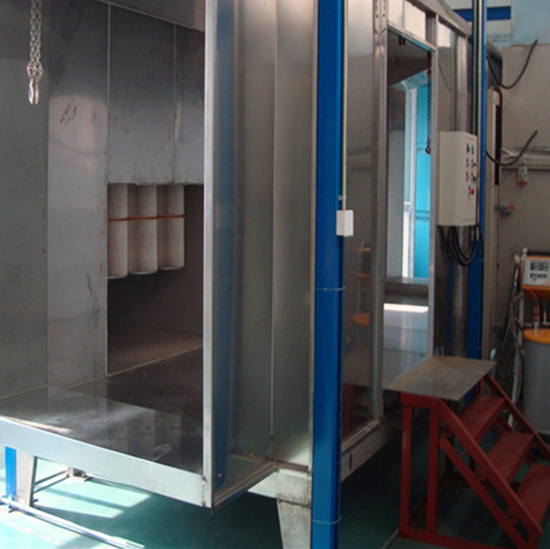
Selecting the right spray booth for your coating line is one of the most consequential decisions a production manager or facility engineer will make. The spray booth sits at the heart of any finishing operation, directly influencing coating quality, worker safety, regulatory compliance, and long-term operational efficiency. Get it right, and you gain a reliable, high-output finishing environment. Get it wrong, and you face recurring quality defects, excessive overspray waste, ventilation problems, and costly retrofits down the line.
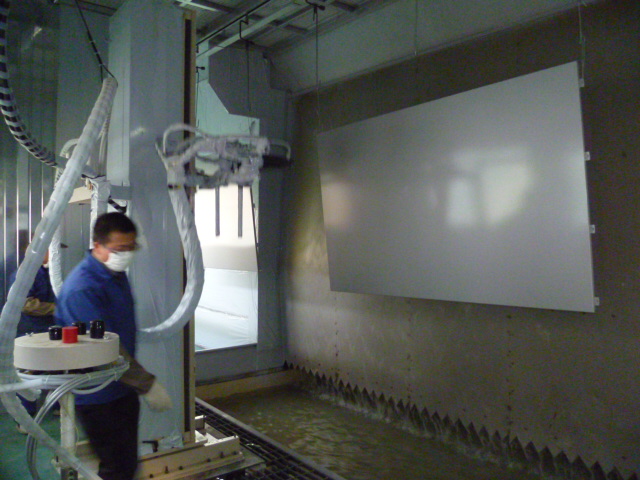
The challenge is that no single spray booth configuration suits every application. Variables such as part geometry, production throughput, coating material type, and available floor space all push the decision in different directions. This guide walks through the core selection criteria, booth types, airflow and filtration considerations, and integration requirements so that you can make an informed, application-specific choice rather than defaulting to a generic solution that may underperform from day one.
Understanding the Role of a Spray Booth in a Coating Line
Core Functions and Why They Matter
A spray booth is far more than a simple enclosure. Its primary function is to create a controlled environment where coating materials can be applied to substrates without contamination from ambient airborne particles, and without releasing hazardous fumes or overspray into the broader workspace. In industrial finishing, this controlled environment is what separates professional-grade results from inconsistent, defect-prone output.
The spray booth also plays a protective role. By containing overspray and directing it toward filtration systems, the booth prevents flammable particles or volatile organic compounds from accumulating to dangerous concentrations. This is particularly critical in powder coating and liquid spray applications where ignition risks must be carefully managed. Regulatory standards in most jurisdictions mandate specific ventilation and exhaust rates for any spray booth used commercially.
Beyond safety, the spray booth contributes directly to finish quality. A well-designed booth maintains consistent airflow velocity across the working zone, preventing turbulence that could deposit overspray back onto freshly coated surfaces. Temperature and humidity control within the spray booth further influence how coatings atomize, adhere, and cure, meaning that environmental management inside the booth is inseparable from coating performance.
The Spray Booth as a System Component
It is a mistake to evaluate a spray booth in isolation. In any modern coating line, the booth is one node within a larger system that may include pretreatment stages, conveyor systems, curing ovens, and quality inspection points. The spray booth must be sized and configured to match the throughput demands of the entire line. A bottle-neck at the booth will suppress the output of every upstream and downstream stage.
Integration considerations also extend to the conveyor or part-handling method. An automated coating line with an overhead conveyor requires a spray booth with appropriate ceiling height, rail openings, and sealed entry and exit curtains to maintain airflow integrity. A batch-processing spray booth serving manual operators has entirely different dimensional and ergonomic requirements. Defining the spray booth's role within the broader line architecture is the essential first step before evaluating any specific booth design.
Spray Booth Types and Their Fit by Application Scenario
Cross-Draft and Down-Draft Configurations
The airflow pattern within a spray booth is perhaps the single most decisive design variable. Cross-draft spray booths draw air horizontally from an inlet wall or opening at one end of the booth, across the working zone, and out through exhaust filters at the opposite end. This configuration is cost-effective and straightforward to build, making it a common choice for smaller operations or facilities where floor space is limited and ceiling height is constrained.
However, cross-draft airflow has a notable limitation: because air travels across the part rather than away from it, there is a higher probability that overspray will be carried back across the coated surface before it exits the booth. For parts with complex geometries or when applying high-solids coatings with heavy overspray, this can lead to contamination and surface defects. Cross-draft spray booth designs work best for relatively flat, simple parts where overspray redeposition is less of a concern.
Down-draft spray booths, by contrast, introduce filtered air through the ceiling plenum and exhaust it through the floor, creating a vertical airflow curtain that carries overspray directly away from the coated surface and downward into the exhaust system. This airflow pattern produces significantly cleaner coating environments and is the preferred choice for high-quality automotive, aerospace, and precision industrial finishing. The spray booth investment is higher, but the finish quality and consistency justify the cost in demanding applications.
Semi-Downdraft and Side-Draft Variants
Semi-downdraft spray booths represent a practical compromise between the simplicity of cross-draft designs and the performance of full downdraft systems. In a semi-downdraft spray booth, fresh air enters through ceiling filters near the front of the booth and is exhausted through filters positioned low on the rear wall. This arrangement produces a diagonal airflow that carries overspray away from the operator and the freshly coated surface more effectively than a pure cross-draft pattern, at a lower installation cost than a full downdraft configuration.
Side-draft spray booths direct airflow from filtered panels on one or both side walls toward exhaust filters on the opposing wall or rear. This design is particularly useful when the spray booth must accommodate tall or wide parts that would be difficult to position optimally in a cross-draft layout. Side-draft configurations also allow for more flexible internal arrangements and can be adapted to suit specific part-handling or robotic spraying setups.
Key Selection Criteria When Specifying a Spray Booth
Part Size, Geometry, and Production Volume
The physical dimensions of the parts to be coated establish the minimum internal working dimensions of the spray booth. However, part size alone is not sufficient. Clearance requirements around the part for adequate airflow, operator movement, and spray gun travel must be factored into the booth width, height, and depth. As a general principle, the working zone of the spray booth should provide at least 0.5 to 1 meter of clearance on all sides of the largest part to ensure that airflow is not disrupted by proximity effects.
Production volume directly influences whether a batch-type or continuous-throughput spray booth is the appropriate choice. Low to medium production volumes, or operations handling many different part types, often favour a walk-in or drive-through spray booth that can be loaded and unloaded manually or with simple fixtures. High-volume lines, especially those running a limited range of part geometries, benefit from a spray booth integrated into a continuously moving conveyor system, where parts pass through the booth on overhead or floor-mounted conveyors without interrupting production flow.
Coating Material Compatibility and Environmental Controls
Different coating materials place very different demands on the spray booth environment. Powder coatings require a dry, humidity-controlled environment and generate fine airborne particles that demand high-efficiency filtration. Liquid solvent-based coatings introduce volatile organic compounds and flammable vapours that require explosion-proof electrical components throughout the spray booth and precisely calculated air exchange rates to maintain safe vapour concentrations. Water-based coatings are less flammable but are sensitive to temperature and humidity fluctuations that can cause application defects if the spray booth environment is not adequately controlled.
For operations using multiple coating types, the spray booth may need to incorporate switchable filtration media and modular environmental controls to accommodate the different requirements without full reconfiguration. This flexibility adds cost but protects the operational versatility of the line. Any spray booth intended for powder coating should also include grounding provisions to dissipate static charge buildup, which can cause uneven coating deposition and, in some circumstances, create ignition risks.
Filtration Efficiency and Maintenance Requirements
The filtration system within a spray booth performs two functions simultaneously: it protects the exhaust equipment and downstream environment from overspray contamination, and it maintains the internal air quality necessary for consistent coating results. Inlet filters prevent ambient dust from entering the spray booth working zone, while exhaust filters capture overspray particles before they reach the exhaust fans or enter the building's exhaust ducting.
Filter selection should be matched to the particle size and chemistry of the coating material in use. Fiberglass panel filters are widely used for liquid coatings, offering reasonable capture efficiency at low cost and easy replacement. For powder coating applications, the spray booth filtration system typically incorporates cartridge filters or cyclone separators that can achieve very high capture efficiencies and, in some designs, allow powder recovery for reuse. Evaluating the ongoing filter replacement cost and maintenance interval for any spray booth under consideration is an important part of the total cost of ownership analysis.
Integration with Automated Powder Coating Lines
Positioning the Spray Booth Within the Line Sequence
In a fully automated powder coating line, the spray booth is typically positioned after the pretreatment and drying stages and before the curing oven. This sequence ensures that parts arrive at the spray booth with clean, dry, chemically prepared surfaces that will accept the coating uniformly. Any residual moisture or contamination carried into the spray booth from earlier stages will compromise coating adhesion and surface quality, so the transition between pretreatment drying and the spray booth is a critical process control point.
The spray booth must also be coordinated with the line's conveyor speed. If the conveyor moves faster than the spray application system can effectively coat each part, the result is thin, incomplete coverage. If the conveyor moves slower than the spray booth's airflow is designed to support, there is a risk of overspray accumulation and uneven film build. Matching the spray booth capacity to the line's designed throughput rate is a fundamental engineering requirement, not an afterthought.
Automation and Robotic Spray Systems
Modern automated coating lines increasingly incorporate robotic spray guns or reciprocators within the spray booth to achieve consistent, programmable coating application without operator fatigue or variability. When a spray booth is designed to house robotic applicators, the internal dimensions, mounting provisions, access panels, and electrical infrastructure must all be specified with the automation equipment in mind from the outset. Retrofitting a spray booth designed for manual application to accommodate robotics is significantly more expensive and complex than integrating automation from the initial design stage.
Robotic spray systems within a spray booth also generate different airflow demands than manual application. Because the applicator moves along a programmed path rather than following an operator's intuitive movements, the overspray plume is more predictable and consistent. This predictability allows the spray booth's airflow system to be optimised for the specific robot trajectory, improving transfer efficiency and reducing filter loading. Specifying the spray booth and the automation system in coordination, rather than sequentially, leads to a more efficient and cost-effective outcome.
Regulatory Compliance and Safety Design in Spray Booth Selection
Ventilation Standards and Air Exchange Requirements
Every commercial spray booth used for industrial finishing must comply with applicable fire codes, occupational health regulations, and environmental discharge standards. Ventilation requirements typically specify a minimum face velocity across the spray booth working zone, expressed in metres per second or feet per minute, to ensure that flammable vapours and airborne particles are continuously diluted and removed before they can accumulate to hazardous concentrations. These minimum velocities vary by jurisdiction and by the specific coating materials being applied.
Compliance with ventilation standards is not simply a regulatory obligation; it is a direct safeguard for the workforce and the facility. Undersized ventilation in a spray booth creates conditions where solvent vapours can build to concentrations approaching the lower explosive limit, with potentially catastrophic consequences. Oversized ventilation, while safer from a vapour concentration standpoint, drives up energy costs and can create turbulence that degrades coating quality. Designing the spray booth ventilation system to operate within the optimal range requires careful calculation based on the specific materials and application methods in use.
Electrical Classification and Fire Suppression
The interior of a spray booth used for flammable coatings must be classified as a hazardous area for electrical installation purposes. This means that all electrical components within or adjacent to the spray booth — including lighting, motor controls, sensors, and any powered tooling — must be rated and installed in accordance with the appropriate hazardous area classification. Using standard, non-rated electrical equipment inside a spray booth with flammable atmospheres is both a serious safety risk and a common cause of regulatory non-compliance citations during facility inspections.
Fire suppression systems designed specifically for spray booth environments use agents compatible with the coating materials in use and are configured to activate rapidly in response to temperature or flame detection. The spray booth design should accommodate the suppression system's nozzle layout and agent supply lines without obstructing airflow or creating shadows in the working zone. Selecting a spray booth supplier who understands both the coating process requirements and the safety engineering requirements will simplify this integration significantly.
FAQ
What is the most important factor when choosing a spray booth for a powder coating line?
The most important factor is matching the spray booth's airflow design, dimensions, and filtration system to the specific demands of powder coating. Powder coating requires dry, controlled air, high-efficiency particulate filtration, and adequate static grounding. The spray booth must also be sized and positioned to align with the conveyor speed and throughput requirements of the full coating line, rather than being evaluated as a standalone unit.
Can one spray booth handle both powder coating and liquid coating applications?
It is technically possible to design a spray booth that accommodates both powder and liquid coating, but it requires careful specification of filtration media, electrical classification, and environmental controls that satisfy the requirements of both processes. The more practical approach for high-volume operations is to dedicate separate spray booth units to each coating type, since the operational requirements differ significantly and sharing a single spray booth between processes often results in compromises that reduce quality and efficiency in both applications.
How does airflow direction affect finish quality in a spray booth?
Airflow direction determines how overspray is carried away from freshly coated surfaces. Down-draft spray booths provide the cleanest coating environment because air flows directly away from the part and downward, minimising the risk of overspray redeposition. Cross-draft configurations carry air horizontally across the part, which can result in overspray contamination for complex geometries or heavy-overspray applications. Choosing the correct airflow pattern for the specific part type and coating material is essential for achieving consistent, defect-free results.
What maintenance practices extend the service life of a spray booth?
Regular filter inspection and replacement are the most critical maintenance tasks for any spray booth. Clogged filters restrict airflow, disrupt the designed velocity profile, and can create hazardous vapour accumulation. Beyond filtration, the spray booth interior should be inspected and cleaned regularly to remove built-up overspray from walls, floors, and fan housings. Lighting fixtures, exhaust fans, and airflow measurement points should be checked on a scheduled basis to ensure the spray booth continues to operate within its designed performance parameters.
Table of Contents
- Understanding the Role of a Spray Booth in a Coating Line
- Spray Booth Types and Their Fit by Application Scenario
- Key Selection Criteria When Specifying a Spray Booth
- Integration with Automated Powder Coating Lines
- Regulatory Compliance and Safety Design in Spray Booth Selection
-
FAQ
- What is the most important factor when choosing a spray booth for a powder coating line?
- Can one spray booth handle both powder coating and liquid coating applications?
- How does airflow direction affect finish quality in a spray booth?
- What maintenance practices extend the service life of a spray booth?