 EN
EN
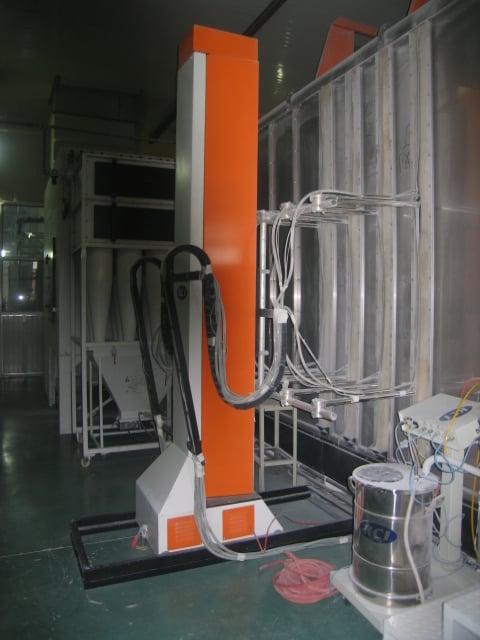
When selecting finishing equipment for an industrial or manufacturing operation, the choice between a paint spray booth and a powder coating booth is one of the most consequential decisions a facility manager will face. Each type of spray booth serves a distinct finishing process, operates under different environmental and safety conditions, and delivers different results on the final product. Understanding how these two systems differ — and when each is the right fit — can save significant time, cost, and operational headaches down the line.
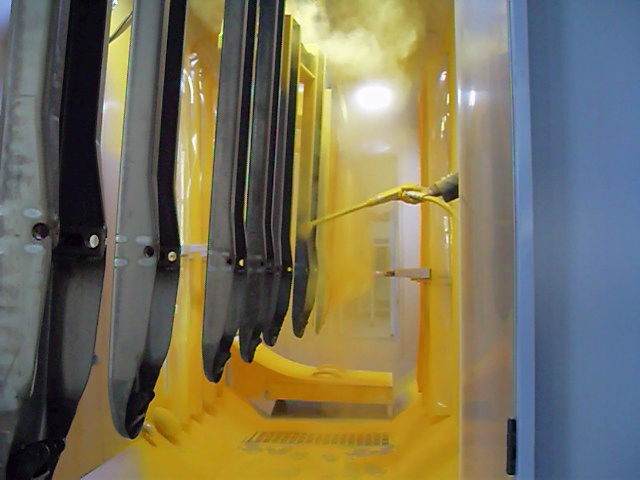
Both a paint spray booth and a powder coating booth are engineered enclosures designed to contain the coating process, protect workers from hazardous particles, and maintain air quality compliance. However, they are not interchangeable. The spray booth configuration, ventilation design, cure system, and material handling approach differ substantially between liquid paint application and powder coating application. This article breaks down those differences clearly so you can make the right infrastructure investment for your specific finishing requirements.
The Core Differences in Process and Technology
How a Paint Spray Booth Works
A paint spray booth used for liquid coatings functions by creating a controlled airflow environment where atomized paint particles are applied to a substrate. The ventilation system draws air through filters, across the work zone, and out through exhaust filters that capture overspray. The spray booth must manage volatile organic compounds (VOCs) generated by solvent-based or water-based liquid paints, which means proper air exchanges per minute and explosion-proof electrical components are non-negotiable requirements.
Liquid paint relies on a solvent carrier — either water or chemical solvent — that must evaporate during or after application. As a result, the spray booth for liquid coatings often integrates a heat and airflow system to accelerate drying and curing. This can range from ambient air dry setups to infrared or convection bake ovens attached to or integrated within the spray booth structure. The process demands tight temperature and humidity control to ensure consistent film build and adhesion.
Overspray management is a critical concern in a liquid paint spray booth. Wet paint particles that do not adhere to the substrate must be captured before they reach the exhaust system. Conventional wet booths use water curtains or water wash systems to trap overspray, while dry filter booths use fiberglass or polyester filter media. The choice between wet and dry filtration affects both operating cost and maintenance frequency for the spray booth.
How a Powder Coating Booth Works
A powder coating spray booth operates on an entirely different physics. Electrostatically charged dry powder particles are sprayed onto a grounded metal substrate, where they adhere without any liquid carrier. The spray booth for powder coating must be designed to collect the fine airborne powder that does not land on the part, redirect it through a recovery system, and allow that reclaimed powder to be reused in subsequent coating cycles.
Because no solvents are involved, a powder coating spray booth does not need to manage VOCs or explosion-risk concentrations of flammable vapors in the same way a liquid paint spray booth does. However, fine powder particles suspended in air can still create a combustible dust hazard above certain concentration thresholds, which means the spray booth must include appropriate explosion venting, grounding, and powder containment engineering. This is a different but equally serious safety consideration.
After application in the powder coating spray booth, the coated part moves into a curing oven where heat — typically between 160°C and 200°C — causes the powder to melt, flow, and cross-link into a hard, durable film. This curing stage is entirely separate from the spray booth itself, unlike some liquid paint systems where baking can occur within the booth enclosure. The modular nature of the powder process means the spray booth and the cure oven are distinct capital investments.
Ventilation, Airflow, and Safety Engineering
Airflow Design in a Liquid Paint Spray Booth
The ventilation design of a liquid paint spray booth is governed by the need to dilute and evacuate solvent vapors quickly enough to stay below the lower explosive limit (LEL) of the solvents in use. National fire protection standards and local regulations typically specify minimum airflow velocities across the open face of the spray booth or through the work zone. A face velocity of 100 feet per minute is a common benchmark in many jurisdictions, though the actual requirement depends on the coating material and booth configuration.
Cross-draft, semi-downdraft, side-draft, and full downdraft configurations are all available for liquid paint spray booths. The downdraft spray booth, where air enters through the ceiling and exits through floor grates, is generally regarded as producing the highest finish quality because airflow moves contamination away from the freshly coated surface and toward the floor rather than across the part. For high-value products or tight cosmetic specifications, this spray booth configuration is typically preferred.
Makeup air units that heat incoming fresh air during winter months are standard accessories for a liquid paint spray booth in colder climates. Maintaining a stable spray booth temperature ensures that paint viscosity, atomization behavior, and film formation remain consistent regardless of outdoor conditions. Without temperature-controlled makeup air, finish quality can vary dramatically across seasons.
Airflow Design in a Powder Coating Spray Booth
A powder coating spray booth uses a different airflow logic. Rather than exhausting contaminated air to atmosphere through filter media, the spray booth draws powder-laden air through a recovery system — typically a cartridge filter module or a cyclone separator followed by cartridge filters. The recovered powder is fed back into the application system, reducing material waste and lowering per-part coating cost substantially compared to liquid paint overspray, which is generally not recoverable.
The spray booth for powder coating is usually designed as a fully enclosed chamber with a dedicated powder recovery module integrated into the booth structure. Airflow velocities are calibrated to keep powder in suspension long enough to be drawn into the recovery system without allowing it to settle onto the floor or walls in uncontrolled accumulations. Proper spray booth airflow balance is essential to both powder recovery efficiency and booth cleanliness.
Color change procedures are a significant operational consideration in powder coating spray booth design. When switching from one color to another, the entire interior of the spray booth — walls, floor, ceiling, and recovery system — must be cleaned of residual powder to avoid cross-contamination. Some spray booth designs use smooth, easily wiped surfaces and quick-release filter cartridges to streamline color changes, while others use dedicated spray booth enclosures per color for high-volume single-color production runs.
Finish Quality, Durability, and Application Suitability
Finish Characteristics of Liquid Paint Applied in a Spray Booth
Liquid coatings applied in a spray booth offer an exceptionally wide range of aesthetic possibilities. Metallic effects, candy colors, pearlescent finishes, custom tints, and ultra-thin film builds are all more accessible with liquid paint than with powder. For applications requiring precise color matching, complex multi-coat systems, or decorative effects that demand translucency and depth, the liquid paint spray booth is the more flexible platform.
Film thickness control in a liquid paint spray booth requires skilled operators or well-tuned automated systems. Runs, sags, orange peel, and solvent popping are common defects that arise from incorrect spray technique, poor viscosity control, or spray booth conditions that fall outside the acceptable temperature and humidity window. The spray booth environment plays a direct role in finish defect prevention, and investment in high-quality booth conditioning systems pays dividends in first-pass yield.
Liquid coatings can be applied to a wider range of substrate materials in the spray booth, including plastics, composites, wood, glass, and metals. Powder coating is generally limited to electrically conductive substrates, primarily metals, though specialized processes exist for certain non-conductive materials. For facilities finishing mixed-material assemblies, the liquid paint spray booth provides greater process flexibility.
Finish Characteristics of Powder Coating Applied in a Spray Booth
Powder coating consistently delivers a thicker, more impact-resistant, and more chemically resistant film than most liquid coatings applied in a conventional spray booth. The cross-linked thermoset film produced after curing offers superior edge coverage, corrosion resistance, and UV stability for outdoor applications. Industrial equipment, architectural components, automotive parts, and consumer goods that require long service life in demanding environments are strong candidates for powder coating over liquid finishing in a spray booth.
The powder coating spray booth process naturally produces a more uniform film thickness than liquid spray application, particularly on complex three-dimensional parts where liquid paint can thin out on edges and corners. The electrostatic 'wrap' effect draws powder around part geometry and into recesses that are difficult to reach with a liquid spray gun in a conventional spray booth. This wrap characteristic reduces the need for multiple application passes and improves coverage consistency.
From a regulatory standpoint, powder coating spray booth operations generate near-zero VOC emissions, which significantly simplifies compliance with air quality permits in most jurisdictions. Facilities transitioning from liquid paint spray booth operations to powder coating often find that environmental reporting burdens decrease substantially, and that they no longer need to purchase VOC emission credits in regulated air basins.
Capital Cost, Operating Cost, and Infrastructure Requirements
Investment Profile for a Liquid Paint Spray Booth
The initial capital cost of a liquid paint spray booth is generally lower than a comparable powder coating spray booth installation, particularly for small to mid-size operations. A basic liquid paint spray booth with dry filter overspray capture, makeup air heating, and exhaust fan is a relatively straightforward and well-understood piece of equipment with a mature supply base. Facilities with existing spray booths can often modify or upgrade them to handle different liquid coating formulations without major capital reinvestment.
Operating costs for a liquid paint spray booth are driven primarily by filter replacement, energy consumption for makeup air conditioning, solvent disposal costs, and material waste from overspray. Transfer efficiency — the percentage of paint that actually lands on the part — in a spray booth using conventional air spray guns can be as low as 25 to 30 percent, meaning a large fraction of purchased coating material ends up as captured waste. High-volume transfer efficiency (HVLP) guns and electrostatic liquid spray systems can improve this metric significantly within the existing spray booth infrastructure.
Regulatory compliance costs are an ongoing consideration for liquid paint spray booth operators. VOC permit fees, hazardous waste disposal for paint sludge and used solvents, and periodic spray booth inspection and certification requirements add to the total cost of ownership in ways that are sometimes underestimated during initial spray booth procurement decisions.
Investment Profile for a Powder Coating Spray Booth
A powder coating spray booth installation typically requires higher upfront capital than a liquid paint spray booth of equivalent throughput capacity. The spray booth itself, the powder recovery system, the electrostatic application equipment, the pretreatment wash system, and the cure oven all represent distinct capital line items that must be budgeted together. An automatic spray pretreatment powder coating line integrates these elements into a coherent production system, but the total investment reflects the complexity of the complete process chain.
Operating costs for a powder coating spray booth are generally more favorable over time. Powder material transfer efficiency can exceed 95 percent when recovered powder is recycled back into the application system, compared to the 30 to 60 percent range typical in liquid paint spray booth operations. Energy costs for the cure oven are significant, but the absence of VOC abatement equipment, reduced filter replacement frequency, and lower waste disposal costs often result in a lower total cost per part at scale.
Labor productivity in a powder coating spray booth environment is typically higher than in liquid paint spray booth operations because the powder process is more forgiving of minor application variation, requires less rework, and generates less operator fatigue from solvent exposure. These soft productivity gains, while harder to quantify precisely, contribute meaningfully to the total economic case for powder coating spray booth investment in high-volume production environments.
Choosing the Right Spray Booth for Your Operation
Factors That Favor a Liquid Paint Spray Booth
If your product mix includes non-metallic substrates, your customers require complex decorative finishes, or your production volumes are low and color variety is high, a liquid paint spray booth is likely the more practical choice. The lower entry cost and greater finish flexibility of a liquid paint spray booth make it well-suited for job shop environments, custom fabricators, and facilities where finish requirements change frequently. Repair and refinishing applications, where matching existing liquid coatings on assembled products is required, also strongly favor the liquid paint spray booth.
Facilities that already have liquid paint spray booth infrastructure and a trained spray booth workforce may find that the transition cost to powder coating — including new capital, retraining, and process validation — outweighs the operating cost benefits, particularly if production volumes do not justify the investment. In these cases, optimizing the existing liquid paint spray booth with higher-efficiency application equipment and better VOC management may be the more pragmatic path.
Factors That Favor a Powder Coating Spray Booth
High-volume production of metal parts with consistent finish specifications is the ideal scenario for powder coating spray booth investment. If your operation produces the same or similar parts in large quantities, the material efficiency, low VOC emissions, superior finish durability, and reduced regulatory burden of a powder coating spray booth combine to deliver compelling long-term economics. Industries such as metal furniture, agricultural equipment, HVAC components, racking systems, and architectural metalwork have broadly adopted powder coating spray booth technology for exactly these reasons.
Operations that face tight environmental compliance requirements or that operate in air quality non-attainment areas will find that a powder coating spray booth significantly simplifies the regulatory picture. The near-zero VOC profile of powder coating eliminates the most burdensome compliance requirements associated with liquid paint spray booth operations and reduces the risk of permit violations that can interrupt production.
When long-term product durability and reduced warranty claims are a priority, the powder coating spray booth delivers a measurably tougher finish. For products that will be used outdoors, in corrosive environments, or under heavy mechanical stress, the performance advantage of powder over liquid coating applied in a conventional spray booth is well-documented and consistently observed in field performance data.
FAQ
Can a single spray booth be used for both liquid paint and powder coating?
A standard spray booth is not designed to handle both processes simultaneously or interchangeably. Liquid paint spray booths and powder coating spray booths have fundamentally different ventilation, filtration, grounding, and safety systems. Combination booths do exist for certain low-volume or R and D applications, but they involve significant compromises in performance and are not practical for production environments. Most facilities choose one process and invest in a spray booth purpose-built for that application.
What is the typical size range for a production spray booth?
Production spray booths range from compact manual spray booth cells measuring roughly 3 meters wide by 3 meters deep to large drive-through spray booth tunnels designed for vehicles, heavy equipment, or continuous conveyor lines. The appropriate spray booth size is determined by the largest part dimension, the required throughput rate, and whether the process will be manual or automated. Conveyor-fed powder coating spray booth systems are often sized to match the throughput of the pretreatment and cure oven systems upstream and downstream.
How does pretreatment affect spray booth finish quality?
Pretreatment — the cleaning, degreasing, and conversion coating of the substrate before it enters the spray booth — is arguably the most important factor in long-term finish adhesion and corrosion resistance. Poor pretreatment will undermine even the best spray booth application process. For powder coating spray booth systems, a multi-stage spray pretreatment system that includes degreasing, rinsing, iron or zinc phosphating, and a final seal rinse is standard practice in professional operations. Skipping or shortcutting pretreatment is the most common cause of premature finish failure.
What maintenance does a spray booth require?
Routine spray booth maintenance includes filter inspection and replacement, fan and motor servicing, interior cleaning to remove accumulated overspray or powder, lighting inspection, and periodic certification of safety systems including fire suppression and explosion relief components. For a powder coating spray booth, cartridge filter cleaning or replacement and recovery system calibration are additional regular tasks. A well-maintained spray booth operates more consistently, produces fewer finish defects, and has a longer service life than a neglected one. Establishing a documented spray booth maintenance schedule is a best practice for any finishing operation.