
 EN
EN
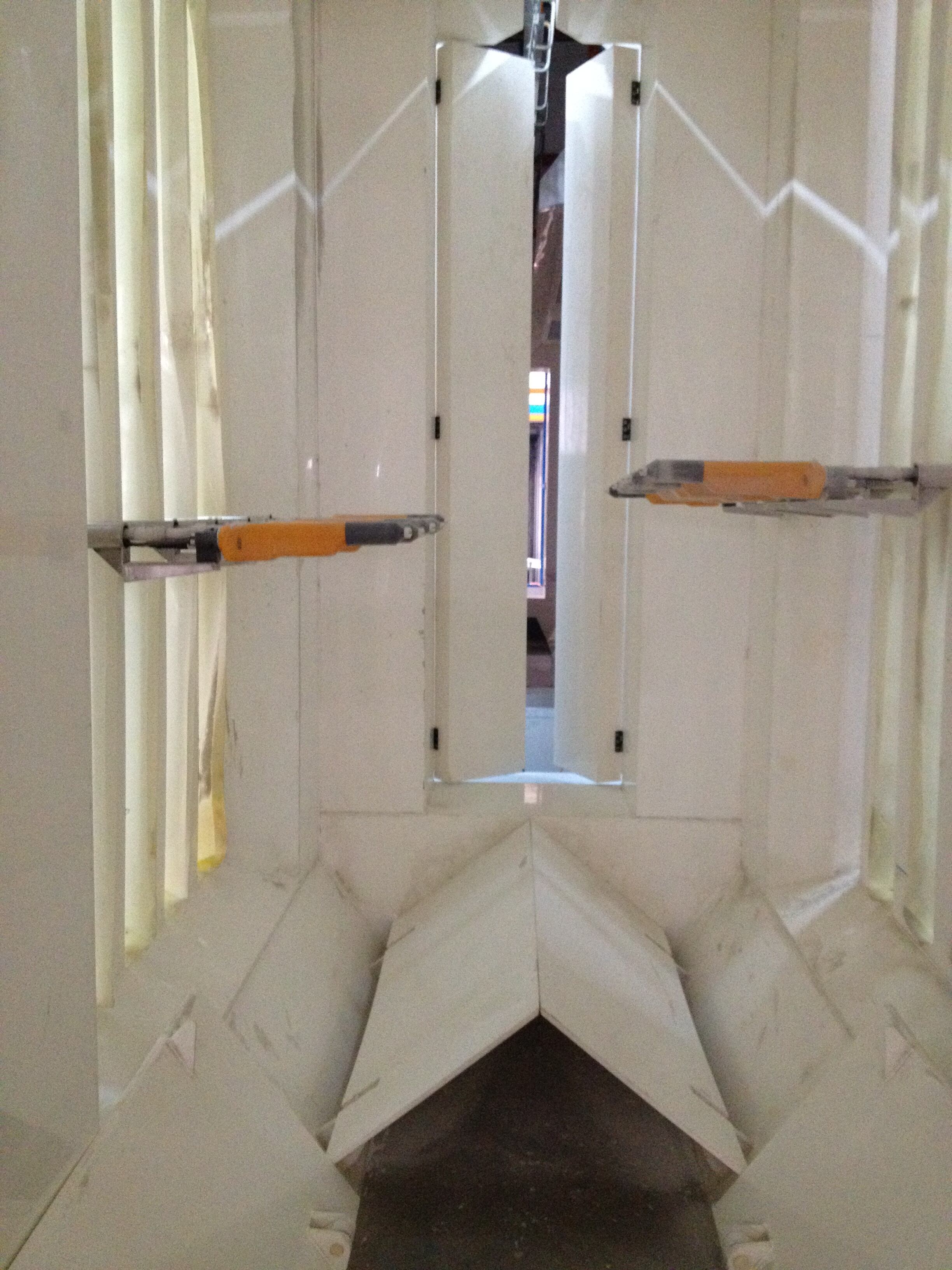
Choosing between automatic and manual spray booth configurations represents one of the most critical decisions facing manufacturers in surface finishing operations. This choice directly impacts production throughput, coating quality consistency, labor costs, and long-term operational efficiency. As industries demand higher output volumes with tighter quality specifications, understanding the functional differences, cost implications, and operational characteristics of each spray booth type becomes essential for making an informed capital investment decision that aligns with your manufacturing objectives and business model.
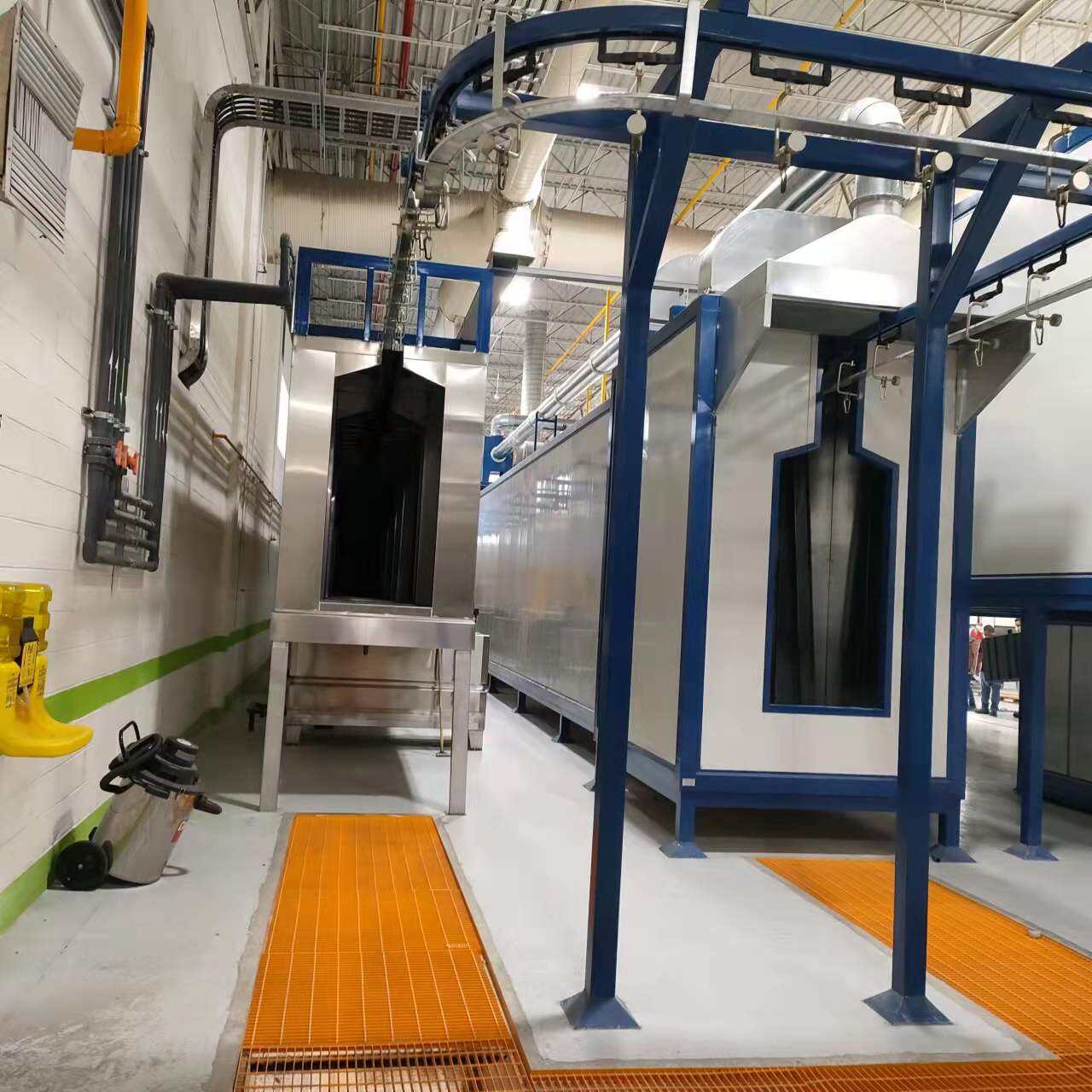
The distinction between automatic and manual spray booth systems extends far beyond simple automation versus hands-on operation. Each system architecture delivers unique advantages in specific production contexts, operator skill requirements, maintenance protocols, and capital versus operating cost structures. This comprehensive analysis examines the technical characteristics, application suitability, economic considerations, and performance trade-offs between automatic and manual spray booth configurations to help you determine which system best serves your coating operation requirements, production volume expectations, and quality control standards.
Core Operational Differences Between Automatic and Manual Spray Booth Systems
Fundamental Design Architecture and Control Mechanisms
Manual spray booth systems rely on skilled operators who physically control spray guns to apply coatings to workpieces positioned within the booth environment. The operator determines application patterns, gun positioning, trigger control timing, and coating thickness through direct manipulation and visual assessment. The spray booth itself provides containment, ventilation, lighting, and safety features, but the actual coating application remains entirely dependent on human judgment and technique. This design places significant responsibility on operator expertise while offering maximum flexibility for handling diverse part geometries and coating requirements.
Automatic spray booth configurations incorporate programmable robotic arms, reciprocators, or automated conveyance systems that move either the spray guns or workpieces through predetermined paths. These systems use programmable logic controllers to manage spray gun activation, fluid delivery rates, atomization air pressure, and movement speeds according to stored coating recipes. Sensors and feedback mechanisms monitor process parameters continuously, ensuring consistent application regardless of operator variability. The spray booth in automated configurations integrates with upstream and downstream equipment to create a synchronized production line where workpieces move through cleaning, coating, and curing stages with minimal manual intervention.
Operator Skill Requirements and Training Considerations
Operating a manual spray booth demands substantial technical skill development and practical experience. Operators must master proper gun handling techniques, maintain consistent gun-to-substrate distances, control trigger modulation for even film builds, and adjust spray patterns based on part geometry and coating characteristics. Achieving uniform coverage on complex three-dimensional surfaces requires hand-eye coordination, spatial awareness, and the ability to mentally calculate overlap percentages while moving continuously. Training periods typically extend from several weeks to months before operators reach proficiency levels that deliver acceptable quality standards consistently.
Automatic spray booth systems shift skill requirements from manual application technique to programming, maintenance, and process optimization capabilities. Operators need to understand recipe development, path programming for robotic systems, parameter adjustment for different coating materials, and troubleshooting automated equipment failures. While the learning curve for programming may initially seem steep, trained technicians can typically manage multiple automated spray booth stations simultaneously once systems are properly configured. This transformation of labor from direct application to supervision and optimization fundamentally changes workforce planning and training investments.
Production Rate Capabilities and Throughput Consistency
Manual spray booth operations exhibit inherent variability in production rates based on operator fatigue, part complexity, and shift-to-shift performance differences. Experienced operators may achieve 15 to 30 parts per hour for moderately complex geometries, but this rate decreases with intricate designs requiring careful attention to recessed areas and detailed features. Production consistency depends heavily on maintaining operator focus, managing physical fatigue during extended shifts, and ensuring adequate staffing levels to prevent rushed application that compromises quality standards.
Automatic spray booth systems deliver predictable, repeatable cycle times regardless of shift duration or production volume. Once programmed, automated equipment executes the same motion paths and spray parameters for every workpiece, enabling precise production scheduling and capacity planning. Throughput rates typically range from 30 to 120 parts per hour depending on part size, coating complexity, and conveyance speed, with the upper ranges achievable through multi-station configurations. This consistency enables lean manufacturing practices, just-in-time delivery commitments, and accurate cost-per-part calculations that support competitive pricing strategies in high-volume markets.
Quality Control and Coating Consistency Characteristics
Film Thickness Uniformity and Coverage Predictability
Achieving consistent film thickness across multiple parts and production runs presents ongoing challenges in manual spray booth applications. Even highly skilled operators introduce subtle variations in gun distance, overlap patterns, and trigger timing that result in measurable thickness differences between parts and across different areas of complex geometries. These variations typically fall within a range of plus or minus 15 to 25 percent from target thickness specifications, requiring periodic quality inspections and potential rework for parts falling outside acceptable tolerance bands.
Automatic spray booth systems maintain film thickness consistency within plus or minus 5 to 10 percent across production runs when properly programmed and maintained. Robotic spray guns follow identical paths with precise speed control and repeatable trigger activation timing, eliminating human variability factors. This consistency reduces material waste from over-application, minimizes rejection rates from insufficient coverage, and ensures predictable performance characteristics in the finished coating. Industries requiring tight specification compliance for corrosion protection, electrical properties, or aesthetic uniformity particularly benefit from this enhanced consistency that automated spray booth configurations deliver.
Transfer Efficiency and Material Utilization Rates
Transfer efficiency in manual spray booth operations typically ranges from 30 to 60 percent depending on operator technique, part geometry, and coating material characteristics. Skilled operators using high-volume low-pressure spray guns on flat or moderately contoured surfaces may approach the upper end of this range, while complex geometries with deep recesses or intricate details often result in lower efficiency as overspray increases. This material waste directly impacts coating costs, particularly with expensive specialty formulations, and creates additional booth maintenance requirements as overspray accumulates on filters and containment surfaces.
Automatic spray booth systems equipped with optimized spray patterns, electrostatic charging systems, and precise parameter control achieve transfer efficiencies between 60 and 85 percent in typical production scenarios. The combination of repeatable gun positioning, optimized atomization settings, and elimination of human motion variability significantly reduces overspray generation. Some advanced automated configurations incorporate powder coating recycling systems or material recapture technologies that further improve overall material utilization. These efficiency gains translate directly to reduced coating material consumption, lower volatile organic compound emissions in liquid coating applications, and extended filter service intervals that reduce maintenance costs and production interruptions.
Defect Rates and Quality Assurance Protocols
Manual spray booth operations experience defect rates that correlate strongly with operator experience, fatigue levels, and part complexity. Common defects include runs and sags from excessive application, dry spray from inadequate film build, orange peel texture from improper atomization or gun distance, and skip areas where coverage gaps occur. Quality assurance in manual operations typically requires sampling inspection protocols that check a percentage of finished parts while accepting some statistical defect rate as economically inevitable given human performance variability.
Automated spray booth configurations enable near-zero-defect production targets when properly commissioned and maintained. The elimination of operator variability removes the primary source of application defects, while integrated monitoring systems can detect equipment malfunctions or parameter drift before defective parts enter downstream processes. Many automatic spray booth installations incorporate in-line inspection technologies such as film thickness measurement systems or machine vision quality checks that verify every part rather than relying on sampling protocols. This comprehensive quality assurance approach reduces warranty claims, customer returns, and the hidden costs associated with rework operations or field failures.
Economic Analysis and Investment Return Considerations
Capital Investment Requirements and Equipment Costs
Manual spray booth installations represent the lower end of capital investment requirements, with basic single-station configurations ranging from $20,000 to $75,000 depending on booth size, ventilation capacity, filtration systems, and safety features. These systems provide essential containment and environmental control without the mechanical complexity of automated material handling or robotic application equipment. For small manufacturers, job shops, or operations with highly variable part mixes, this modest capital requirement makes manual spray booth technology accessible without extensive financing arrangements or multi-year payback expectations.
Automatic spray booth systems involve substantially higher initial capital investments, typically ranging from $150,000 to $500,000 for single-station robotic configurations and potentially exceeding $1 million for multi-station integrated coating lines with automated pretreatment, application, and curing zones. These investments include robotic spray equipment, programmable controllers, conveyor systems, recipe management software, safety interlocks, and integration with upstream and downstream processes. While the absolute investment appears significant, the economic justification emerges through analysis of labor savings, material efficiency gains, quality improvement benefits, and production capacity increases that generate acceptable return on investment periods for high-volume manufacturing operations.
Operating Labor Costs and Workforce Requirements
Manual spray booth operations require dedicated operators for each active coating station throughout production shifts. A typical two-shift operation running ten hours per shift with appropriate break coverage might require three to four trained operators per spray booth to maintain continuous production. At average industrial labor rates including benefits and overhead, annual labor costs per manual spray booth easily reach $150,000 to $250,000 depending on regional wage structures and skill premiums for experienced coating technicians. These ongoing expenses continue indefinitely and typically increase annually with wage inflation and benefits cost escalation.
Automatic spray booth systems reduce direct labor requirements significantly, typically requiring one technician to supervise multiple automated stations simultaneously. This technician focuses on loading upstream conveyors, monitoring system performance, responding to alerts or malfunctions, and performing preventive maintenance tasks rather than continuous manual spray application. Labor cost savings frequently reach 60 to 75 percent compared to equivalent manual capacity, creating annual savings of $100,000 to $175,000 per replaced manual booth position. These savings accumulate year after year, providing the economic foundation for capital investment justification and typically generating investment payback within two to four years for operations running at moderate to high production volumes.
Material Consumption and Waste Generation Economics
The transfer efficiency differences between manual and automatic spray booth configurations create substantial economic impacts in coating material consumption. For a production operation using 10,000 pounds of coating material annually, improving transfer efficiency from 45 percent typical of manual application to 70 percent achievable with automated systems reduces actual material purchases from 22,222 pounds to 14,286 pounds, generating savings of nearly 8,000 pounds. At coating costs ranging from $8 to $25 per pound depending on formulation complexity, annual material savings reach $64,000 to $200,000 for this single operational parameter improvement.
Beyond direct material costs, improved transfer efficiency in automatic spray booth systems reduces waste disposal expenses, hazardous material handling requirements, and environmental compliance burdens. Lower overspray generation extends filter life, reduces booth cleaning frequency, and minimizes volatile organic compound emissions that may trigger regulatory reporting thresholds or require expensive abatement equipment. These secondary economic benefits, while harder to quantify precisely, add meaningful value to the total cost of ownership calculation and strengthen the financial justification for automated spray booth investments in environmentally regulated industries or jurisdictions with stringent air quality standards.
Application Suitability and Production Environment Fit
Part Geometry Complexity and Size Range Considerations
Manual spray booth configurations excel when coating operations involve highly variable part geometries, custom or prototype work, or extremely large components that exceed practical automation envelope limits. Skilled operators adapt instinctively to irregular shapes, deep recesses, blind holes, and intricate surface details that would require extensive programming time in automated systems. For manufacturers producing small batch quantities of diverse products, the flexibility of manual application eliminates the setup time and programming overhead that makes automated spray booth operation uneconomical for short production runs.
Automatic spray booth systems deliver optimal value when production volumes justify programming investment and part geometries remain consistent or fall within defined families sharing similar coating requirements. Cylindrical objects, flat panels, automotive components, appliance housings, and other repetitive manufactured goods represent ideal candidates for automated coating. Modern robotic systems with six-axis movement capability can address moderately complex geometries effectively, but parts with extreme aspect ratios, internal passages requiring coating, or unique one-off configurations may still demand manual application techniques that automated equipment cannot replicate cost-effectively.
Production Volume Thresholds and Economic Break-Even Analysis
Economic analysis typically identifies production volume thresholds where automatic spray booth investments become financially justified compared to manual alternatives. For relatively simple parts requiring straightforward coating coverage, this break-even point often occurs around 5,000 to 10,000 parts annually, where labor savings and material efficiency gains offset the higher capital costs within acceptable payback periods. Operations producing fewer parts may struggle to justify automation unless quality requirements, consistency demands, or strategic competitive positioning factors override pure financial return calculations.
High-volume manufacturing environments processing 50,000 to 500,000 or more parts annually find automatic spray booth technology virtually essential for maintaining competitive cost structures and meeting customer quality expectations. At these production scales, even modest per-part cost reductions generate substantial annual savings that justify significant capital investments and create competitive advantages that manual operations cannot match. The decision framework should consider not only current production volumes but also growth trajectories, market share expansion plans, and the potential for automated capacity to enable customer acquisition that would be impossible with manual spray booth limitations on throughput and consistency.
Quality Specification Requirements and Industry Standards Compliance
Industries with stringent quality specifications such as aerospace, medical devices, automotive safety components, and certain electronics applications increasingly mandate coating consistency levels that exceed typical manual spray booth capabilities. These sectors often require statistical process control documentation, capability studies demonstrating process repeatability, and certification that coating systems can maintain specifications across extended production runs without drift or variation. Automatic spray booth technology provides the process control and documentation capabilities necessary to meet these demanding requirements and maintain supplier qualification status.
Manual spray booth operations remain entirely adequate for applications where aesthetic appearance represents the primary concern without critical performance specifications, where coating serves primarily as corrosion protection with generous thickness tolerances, or where artisanal quality and custom appearance justify premium pricing that offsets higher labor costs. Architectural metalwork, custom furniture finishing, artistic fabrication, and restoration projects often benefit from the human judgment and adaptive techniques that skilled manual operators provide, making expensive automation unnecessary and potentially counterproductive for these specialized market segments.
Maintenance Requirements and Operational Reliability Factors
Preventive Maintenance Protocols and Service Intervals
Manual spray booth maintenance focuses primarily on ventilation system upkeep, filter replacement, booth cleaning, and spray gun servicing. These tasks require relatively straightforward mechanical skills and can typically be performed by general maintenance personnel with basic training. Filter replacement intervals depend on production volume and transfer efficiency but generally range from weekly to monthly for high-volume operations. Spray gun maintenance involves daily cleaning, weekly lubrication, and periodic replacement of wear components such as needles, nozzles, and air caps. Total maintenance labor requirements typically amount to 5 to 10 hours per week for a continuously operating manual spray booth installation.
Automatic spray booth systems demand more sophisticated maintenance protocols addressing robotic mechanical systems, pneumatic controls, electrical components, programming backup procedures, and sensor calibration requirements. Preventive maintenance schedules include daily inspection checklists, weekly lubrication routines, monthly calibration verification, and quarterly comprehensive system audits. While individual maintenance tasks require higher skill levels, the elimination of multiple operator positions often provides adequate personnel to absorb these requirements without increasing total maintenance staffing. Many manufacturers find that total maintenance hours for automated systems remain comparable to manual alternatives when accounting for the higher production output achieved per maintenance hour invested.
Downtime Risk Analysis and Production Continuity Planning
Manual spray booth operations exhibit excellent resilience against catastrophic production interruptions because equipment failure in one booth does not necessarily disable alternative coating capacity. If a spray gun malfunctions, operators can switch to backup equipment within minutes. Ventilation system issues may slow production but rarely create complete stoppages if temporary ventilation arrangements can be implemented. The simplicity of manual systems means that most failures can be diagnosed and repaired quickly using common tools and readily available replacement parts stocked in typical maintenance inventories.
Automatic spray booth installations create single-point-of-failure risks where robotic system malfunctions, control system failures, or conveyor breakdowns can halt entire production lines until repairs are completed. This vulnerability requires comprehensive spare parts inventory strategies, maintenance technician training programs, and sometimes service contracts with equipment suppliers to ensure rapid response when failures occur. Many manufacturers implement redundant critical components, maintain hot spare subassemblies for rapid replacement, and develop contingency protocols for manual coating of critical parts during extended automated system downtime. Despite these risks, well-maintained automatic spray booth systems often achieve overall equipment effectiveness ratings exceeding 85 percent, demonstrating that proper maintenance management can deliver excellent reliability in automated production environments.
Technology Obsolescence and Upgrade Path Considerations
Manual spray booth technology changes slowly, with basic operating principles remaining constant for decades despite incremental improvements in ventilation efficiency, filtration technology, and spray gun atomization performance. This stability means that properly maintained manual systems can deliver acceptable service for 15 to 25 years without major reinvestment requirements. Upgrades typically involve replacing worn spray guns with improved models, updating filtration systems for better efficiency or environmental compliance, and modernizing lighting systems for better visibility and energy efficiency rather than wholesale system replacement.
Automatic spray booth systems face more rapid technology evolution in robotic controls, programming interfaces, sensor technologies, and integration capabilities with enterprise manufacturing systems. Equipment purchased today may become technically obsolete within 10 to 15 years as newer systems offer improved programming ease, better diagnostic capabilities, enhanced safety features, or integration with artificial intelligence optimization algorithms. Manufacturers must consider technology refresh cycles in total cost of ownership calculations and evaluate whether equipment suppliers provide viable upgrade paths that extend system life through control system modernization rather than requiring complete equipment replacement to access newer capabilities.
FAQ
Which spray booth type offers better return on investment for medium-volume production operations?
Medium-volume operations producing between 10,000 and 50,000 parts annually typically find automatic spray booth systems deliver superior return on investment when part geometries remain consistent and quality specifications demand tight consistency. The combination of labor savings, material efficiency improvements, and quality enhancement usually generates payback within two to four years while positioning the manufacturer for volume growth without proportional labor increases. Manual spray booth configurations remain economically viable if product mix varies extensively, custom work predominates, or capital constraints prevent automation investment regardless of potential returns.
Can automatic spray booth systems handle coating material changes and color switches efficiently?
Modern automatic spray booth installations manage material changes and color transitions effectively through dedicated flushing protocols, quick-disconnect fluid delivery systems, and sometimes dedicated spray circuits for different coating families. Changeover times typically range from 15 to 45 minutes depending on color contrast, material compatibility, and system design. While manual operations may complete color changes slightly faster in some scenarios, the consistency and reduced operator involvement in automated changeovers often compensate for any time difference. Operations requiring extremely frequent color changes with very small batch sizes between switches may still favor manual flexibility, but most production environments find automated changeover protocols entirely acceptable.
What safety advantages do automatic spray booth systems provide compared to manual configurations?
Automatic spray booth technology significantly reduces worker exposure to coating materials, solvents, and atomized particulates that pose respiratory hazards, skin contact risks, and long-term health concerns. Operators remain outside the immediate spray zone during application cycles, monitoring processes through viewing windows rather than working within the coating environment. This separation reduces personal protective equipment requirements, minimizes exposure-related health issues, and improves workplace safety metrics. Additionally, automated systems eliminate ergonomic strain from extended periods holding spray guns in awkward positions, reducing repetitive motion injuries and fatigue-related accidents that occur in manual coating operations.
How do environmental regulations influence the choice between automatic and manual spray booth systems?
Increasingly stringent volatile organic compound emission limits, hazardous air pollutant regulations, and waste minimization requirements favor automatic spray booth adoption due to superior transfer efficiency and reduced overspray generation. Facilities operating in jurisdictions with strict air quality standards may find that automated systems enable compliance without expensive add-on abatement equipment required for higher-emission manual processes. The material savings and waste reduction achieved through automation directly support corporate sustainability initiatives and environmental reporting requirements while potentially qualifying manufacturers for green certification programs or preferred supplier status with environmentally conscious customers prioritizing sustainable supply chain partners.
Table of Contents
- Core Operational Differences Between Automatic and Manual Spray Booth Systems
- Quality Control and Coating Consistency Characteristics
- Economic Analysis and Investment Return Considerations
- Application Suitability and Production Environment Fit
- Maintenance Requirements and Operational Reliability Factors
-
FAQ
- Which spray booth type offers better return on investment for medium-volume production operations?
- Can automatic spray booth systems handle coating material changes and color switches efficiently?
- What safety advantages do automatic spray booth systems provide compared to manual configurations?
- How do environmental regulations influence the choice between automatic and manual spray booth systems?