
 EN
EN
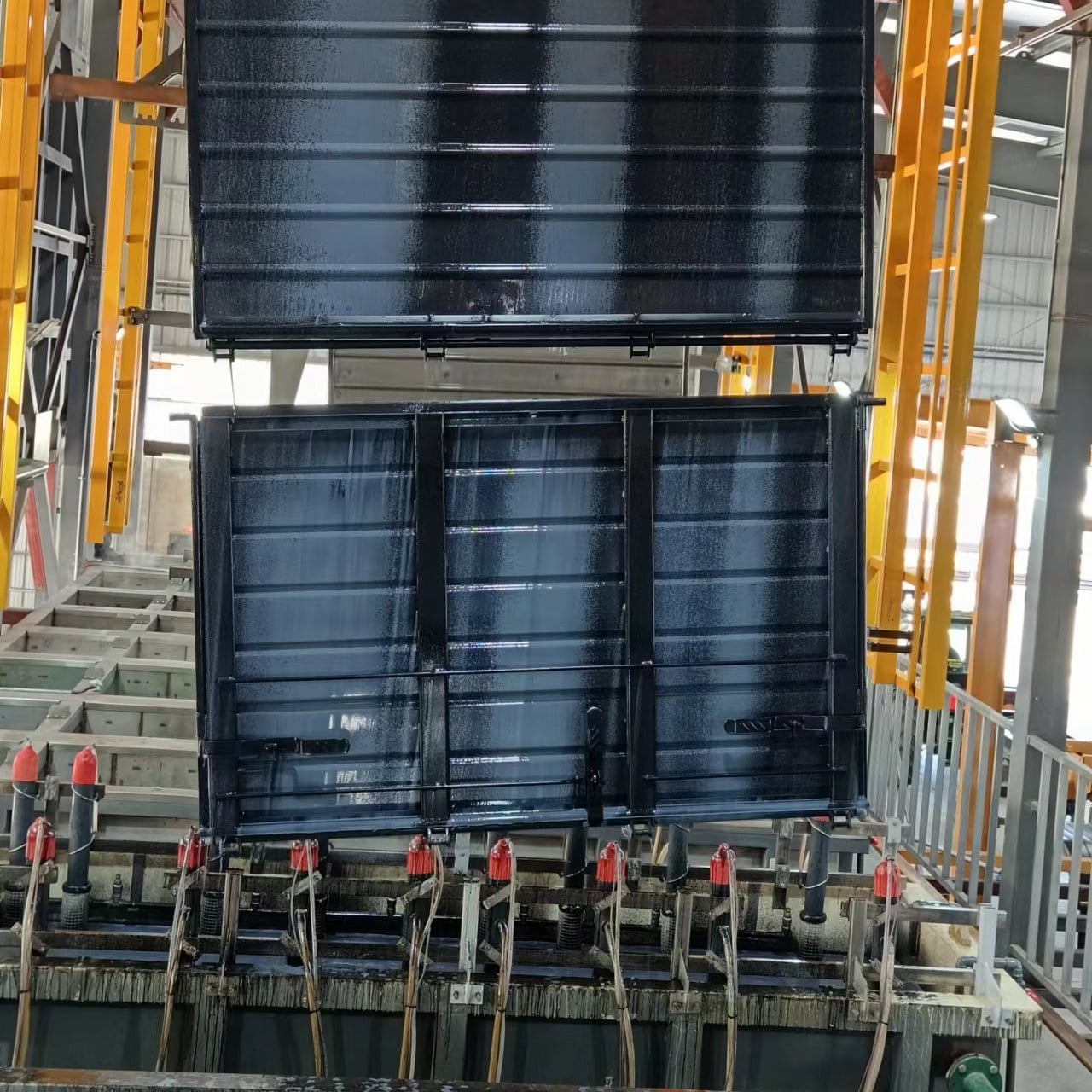
Manufacturing complex-shaped metal parts demands a coating solution that reaches every surface, crevice, and interior angle without compromise. An e-coating line delivers precisely this capability, providing uniform coverage on intricate geometries that traditional spray methods cannot achieve reliably. For automotive, appliance, and industrial equipment manufacturers, the ability to coat complex parts consistently determines both product durability and production efficiency. Understanding why an e-coating line stands apart for these applications reveals a competitive advantage that extends far beyond surface protection.
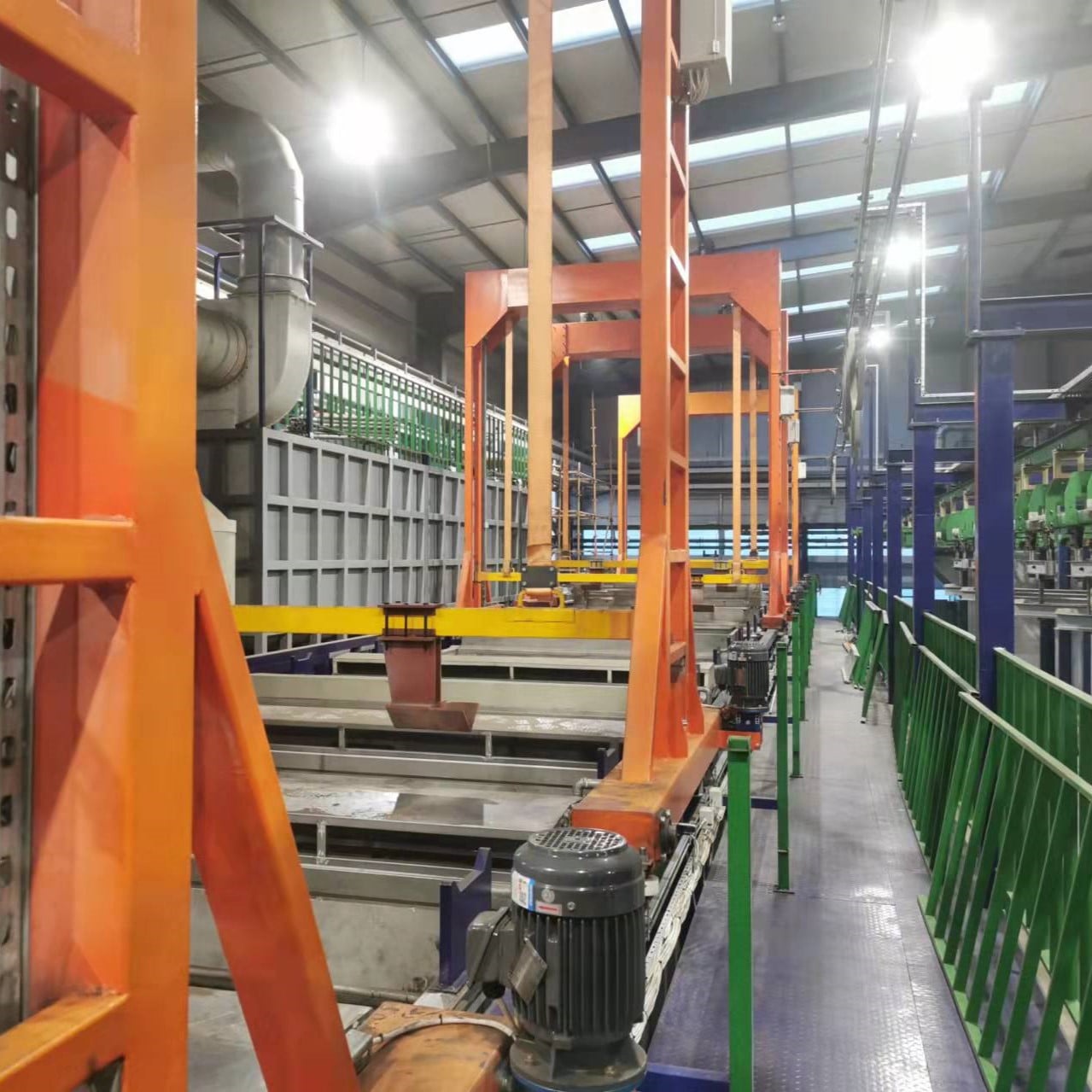
The electrophoretic deposition process fundamentally changes how coating reaches metal surfaces. Unlike spray systems that rely on air pressure and manual skill, an e-coating line uses electrical attraction to pull charged coating particles onto every exposed metal surface simultaneously. This physics-based approach eliminates coverage gaps, ensures film thickness consistency, and dramatically improves first-pass quality. For manufacturers producing intricate components with deep recesses, narrow passages, or multi-directional features, an e-coating line transforms coating from a reliability risk into a controlled, repeatable strength.
Uniform Coverage on Intricate Geometries
How E-Coating Lines Reach Every Surface
An e-coating line immerses entire metal parts into a conductive bath where electrical potential attracts coating particles uniformly across all surfaces. This immersion-based methodology ensures that deep recesses, interior angles, and hard-to-reach cavities receive the same film thickness as exterior surfaces. Parts with complex designs, such as stamped brackets, hollow frames, or multi-chambered housings, benefit tremendously because there are no line-of-sight limitations. When a part enters an e-coating line, the electrophoretic chemistry reaches into every crevice automatically, eliminating the manual repositioning, multi-pass painting, or masking that spray processes demand.
Consistency and Repeatability
Spray coating complex parts introduces variability because operator technique, spray gun angle, and distance directly affect film thickness and coverage quality. An e-coating line removes human variables by relying on electrical potential and immersion time. Once parameters are set on the e-coating line, every part receives identical coating conditions, batch after batch. This repeatability is critical in industries where coating performance directly impacts corrosion resistance, product warranty, and customer satisfaction. For manufacturers running high-volume production of complex-shaped metal parts, standardization across thousands of units becomes achievable with an e-coating line in ways that manual spray cannot match.
Superior Protection for Complex Designs
Corrosion Resistance in Hard-to-Access Areas
Complex metal parts often contain internal voids, overlapping surfaces, or mechanical fastening points where corrosion initiates silently. An e-coating line protects these vulnerability zones by depositing a continuous film inside cavities and at material interfaces where spray coating typically leaves pinholes or thin spots. The electrophoretic deposition process in an e-coating line also promotes film healing and self-leveling, meaning micro-defects close during the process rather than persisting as corrosion entry points. For automotive suspension components, appliance chassis, or structural brackets exposed to salt, moisture, or industrial environments, this internal protection capability directly extends part life and reduces field failures.
Film Quality and Adhesion
The electrical attraction mechanism in an e-coating line creates exceptionally strong adhesion between coating and substrate because deposition occurs at a molecular level rather than as a mechanical layer. This dense bonding makes the coating highly resistant to chipping, flexing stress, and mechanical damage during assembly, handling, or end-use. Complex parts that undergo bending, forming, or vibration during manufacturing or service benefit from the tough, continuous film that an e-coating line produces. The result is a coating system that protects not just against corrosion but also against the mechanical stresses inherent in complex part geometry.
Operational and Economic Advantages
Reduced Waste and Improved Efficiency
An e-coating line operates at coating utilization rates exceeding 95 percent because charged particles deposit onto metal rather than overspray into the booth. For complex parts that require multiple spray passes or careful masking to avoid coating non-functional surfaces, this efficiency represents significant material savings. The controlled deposition in an e-coating line also minimizes hazardous waste streams, lowering disposal costs and environmental compliance burden. When coating complex metal parts, the combination of material efficiency and reduced process waste makes an e-coating line economically superior to traditional spray systems over the production lifecycle.
Integration into High-Volume Manufacturing
Modern manufacturing demands throughput that matches production targets without compromising quality. An e-coating line integrates seamlessly into automated part handling systems because immersion and electrical deposition require no manual intervention once parts are loaded. For complex-shaped metal parts moving through production at high speeds, an e-coating line accommodates conveyor systems, automated fixturing, and continuous flow. The coating process occurs passively while parts move through the bath, meaning cycle time remains predictable and independent of part complexity. This scalability makes an e-coating line the preferred choice for manufacturers scaling from pilot production to mass volume without redesigning the coating process.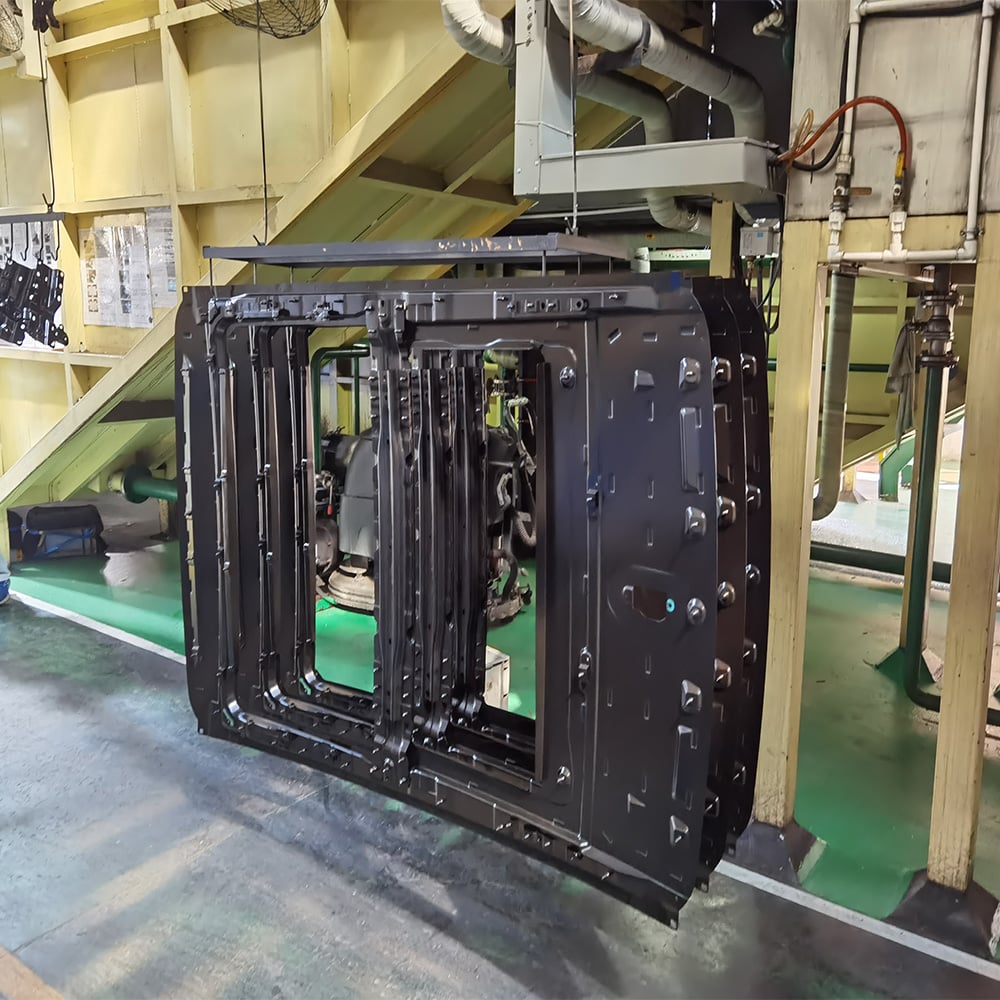
FAQ
Can an e-coating line handle all metal types?
An e-coating line works effectively on mild steel, galvanized steel, aluminum, copper, and most ferrous metals. The process requires electrical conductivity, so non-conductive substrates need primer or special handling. Pre-treatment chemistry within the e-coating line system adapts to different metals, ensuring compatibility and corrosion protection across diverse material compositions used in complex part manufacturing.
What is the typical film thickness from an e-coating line?
An e-coating line deposits controlled film thickness ranging from 15 to 35 microns depending on part geometry, immersion time, and electrical parameters. This thickness provides robust corrosion resistance while remaining thin enough to preserve dimensional tolerances on complex parts. The uniform deposition ensures consistent protection, whether measuring external surfaces or interior recesses of complex-shaped components.
How does an e-coating line compare to powder coating for complex parts?
While powder coating suits flat or simple geometries, an e-coating line excels on complex shapes because it reaches interior surfaces without masking or special fixturing. An e-coating line also enables faster drying and curing, supporting higher production throughput. For complex metal parts where coverage into recesses matters, an e-coating line typically outperforms powder systems in both reliability and cycle time.