 EN
EN
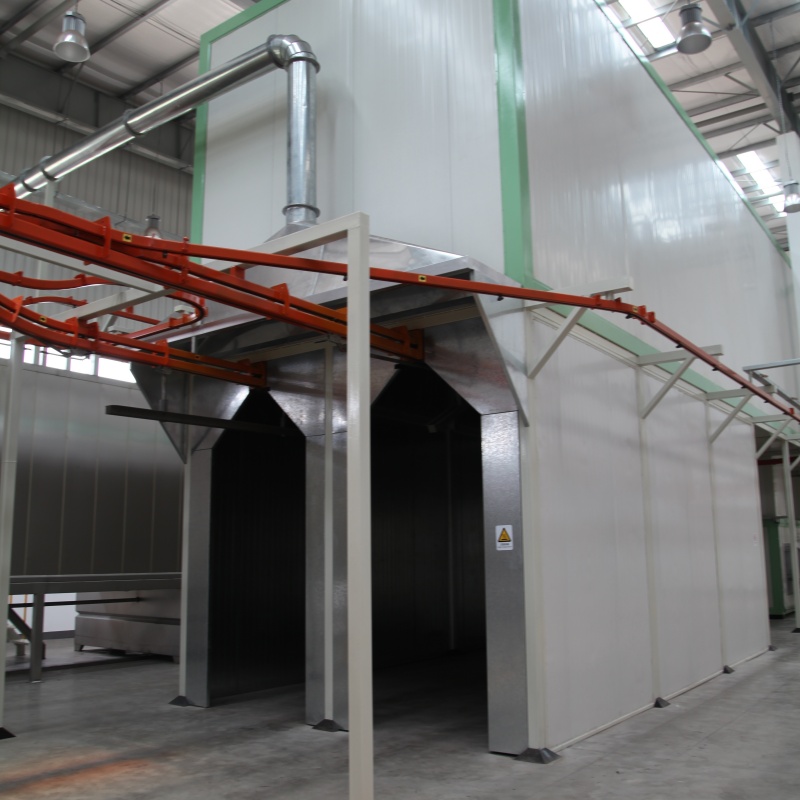
A power and free conveyor system represents one of the most advanced and flexible material handling solutions available for industrial coating operations today. Unlike conventional overhead conveyors that move all parts at a fixed, uniform speed, a power and free conveyor system decouples the drive chain from the load-carrying trolleys, granting each carrier the ability to stop, accumulate, slow down, or divert independently. This fundamental design difference makes it uniquely suited for coating lines, where process timing, part spacing, and station dwell time are critical variables that directly affect finish quality.
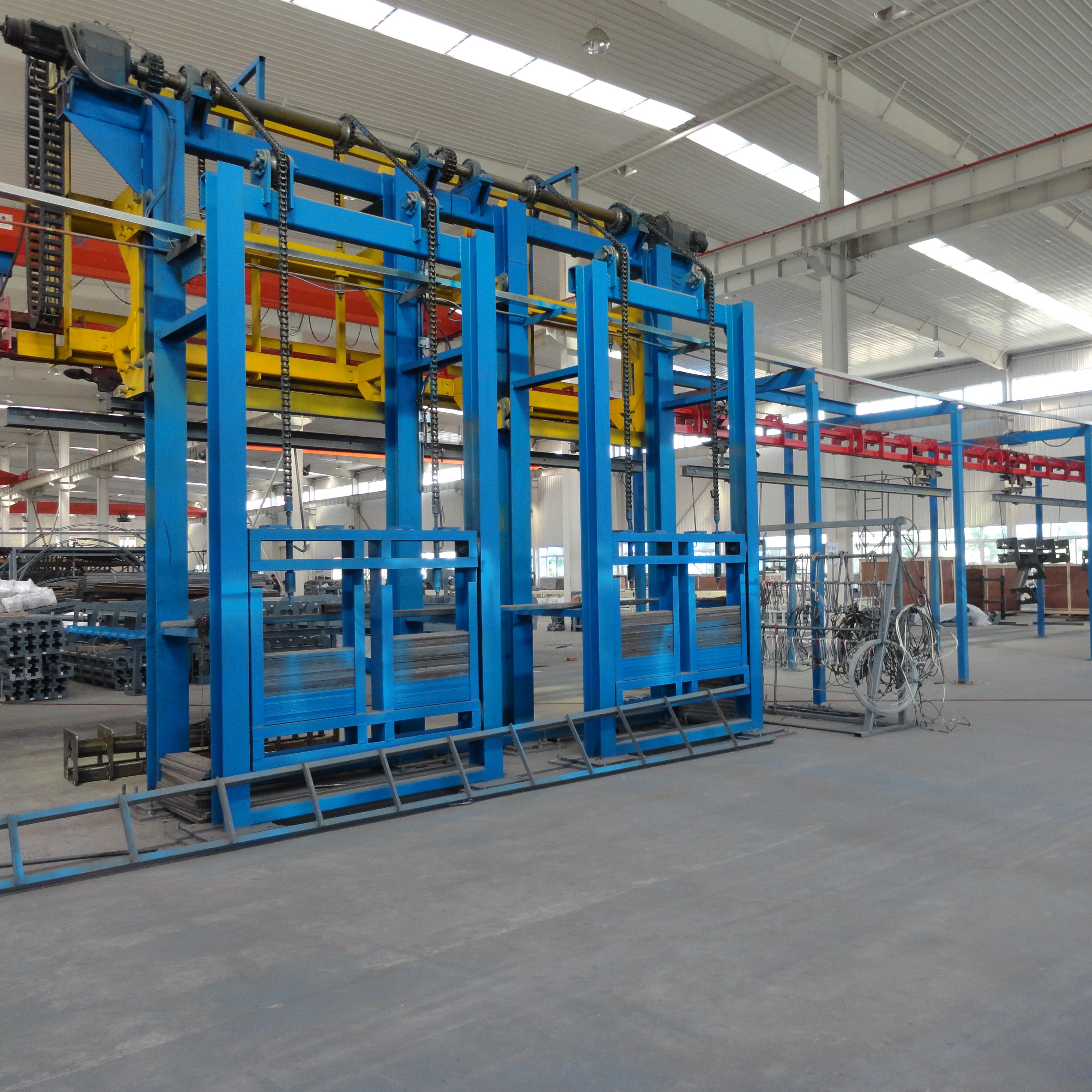
Coating lines — whether dedicated to liquid paint, powder coating, anodizing, electroplating, or e-coat processes — demand precise control over how workpieces travel through each treatment zone. A power and free conveyor system satisfies this demand by offering programmable carrier movement, accumulation zones before ovens, and buffer areas between pre-treatment and application stages. The result is a highly productive, quality-consistent finishing operation that can adapt to fluctuating production volumes and mixed-product runs without halting the entire line. This article explores the key structural features, operational advantages, application logic, and selection considerations for a power and free conveyor system in the context of modern coating lines.
Core Architecture of a Power and Free Conveyor System
The Dual-Rail Track Principle
The defining mechanical characteristic of a power and free conveyor system is its dual-rail construction. The upper rail carries a continuously moving powered chain, while the lower rail, known as the free track, carries load trolleys that can engage with or disengage from the powered chain at will. This separation is the foundational reason why the system delivers so much operational flexibility compared to a standard monorail conveyor.
The engagement mechanism between the powered chain and the free trolleys is typically controlled by pusher dogs mounted on the chain. When a pusher dog contacts the trolley's latch, the trolley is propelled forward along the free track. When the trolley encounters a stop, an accumulation zone, or a divert switch, the latch disengages, and the trolley waits while the powered chain continues running overhead. This means the drive system never needs to stop even when dozens of carriers are held stationary at process stations.
The physical robustness of this architecture allows a power and free conveyor system to carry heavy workpieces — automotive body parts, steel fabrications, large machinery components, and architectural extrusions — without risk of chain overload from localized stops. Load weight is distributed across individually supported trolleys rather than transferred entirely through a single continuous chain.
Trolleys, Carriers, and Load Bars
Each free trolley in a power and free conveyor system is engineered to carry a defined maximum load, typically expressed in kilograms per carrier. These trolleys ride on precision-machined wheels fitted to the lower free rail, offering smooth travel through curves, inclines, and decline sections of the track layout. Carriers — the hanging fixtures or load bars suspended from trolleys — are designed to match the geometry of the workpieces being coated.
In a coating line context, carrier design matters enormously. Poorly designed carriers can cause shadowing during powder coating spray application, create drainage issues in liquid paint operations, or introduce masking problems during pre-treatment stages such as phosphating or chromating. A well-engineered power and free conveyor system integrates carrier geometry planning as part of the overall line design, ensuring that workpieces hang at angles and orientations that promote even coat coverage and efficient drainage.
Many modern installations also incorporate rotating carrier mechanisms on the free trolleys. As a carrier enters a spray booth or an oven zone, a drive mechanism causes it to rotate slowly, exposing all surfaces of the workpiece to the application process equally. This capability — enabled only because the power and free conveyor system allows independent carrier positioning — results in noticeably superior coating uniformity compared to fixed-orientation transport.
Why Coating Lines Specifically Benefit from This System
Process Zone Independence and Accumulation Logic
A coating line is not a single-speed process. Pre-treatment stages such as degreasing, rinsing, and phosphating require timed immersion or spray exposure. The paint or powder application booth requires controlled spray overlap and even travel speed. Curing ovens demand precise dwell times tied to the thermal mass of the workpieces. Cooling zones need adequate time before parts can be handled or packed. Each stage has its own ideal timing requirement, and these rarely align perfectly into a single fixed line speed.
A power and free conveyor system resolves this conflict through programmable accumulation zones and variable-speed sections. Carriers can queue before an oven entrance to maintain a precise pitch spacing inside the oven, preventing shadowing or insufficient heat exposure. They can wait at an inspection station while an operator checks coating adhesion without stalling the upstream pre-treatment zone. This decoupled process management is simply not achievable with a continuous monorail system running at a single fixed chain speed.
The accumulation logic in a power and free conveyor system is managed through a combination of mechanical stops, proximity sensors, and a programmable logic controller. When a carrier reaches a stop point, the PLC registers its presence, monitors the downstream station's availability, and releases the carrier only when the path is clear. This automated sequencing prevents bunching, maintains carrier spacing discipline, and protects delicate pre-treatment chemistry from contamination caused by over-dipping or under-dipping.
Mixed-Product and Multi-Shift Production Flexibility
Modern industrial coating operations rarely coat a single product type in a single color for an entire production day. Automotive suppliers, agricultural equipment manufacturers, and metal furniture producers routinely run multiple part numbers, multiple colors, and multiple coating specifications within the same shift. A power and free conveyor system is inherently compatible with this reality because its routing switches allow carriers to be diverted onto different track branches based on part identification data.
Using barcode scanners, RFID readers, or weight-based identification at entry points, the system's PLC can route specific carriers to the appropriate spray booth, apply the correct curing oven program, or direct certain parts to an offline touch-up station before re-entering the main line. This intelligent routing transforms a power and free conveyor system from a simple transport mechanism into an active production management tool.
For operations running two or three shifts with different product mixes per shift, this flexibility eliminates the need for manual line changeovers that cause costly downtime. The mechanical switches on the track redirect automatically, the PLC adjusts dwell times and oven temperatures based on incoming carrier data, and the line continues flowing with minimal operator intervention. The productivity gain from this level of automation is one of the strongest economic arguments for investing in a power and free conveyor system over simpler alternatives.
Operational Advantages in Oven and Curing Zones
Controlled Dwell Time and Energy Efficiency
One of the most performance-critical stages in any coating line is the curing oven. For powder coating, inadequate dwell time leads to under-cured, brittle films with poor chemical resistance. For liquid paint systems, insufficient baking time causes solvent retention, adhesion failures, and surface defects. A power and free conveyor system gives oven designers and process engineers precise control over how long each carrier spends inside the heated zone.
Because carriers can be stopped, slowed, or accumulated at the oven entrance, the density of parts inside the oven can be managed dynamically. During periods of lower production volume, carriers can be spaced further apart to reduce the thermal load, allowing the oven's burner system to operate more efficiently. During peak production, carriers can be packed more densely up to the system's designed maximum pitch, maximizing output per hour of oven runtime. This demand-responsive operation directly reduces energy consumption per coated unit.
The ability to accumulate carriers at the oven exit — allowing thorough cooling before they move to the unload station — also protects coating quality. Powder-coated parts that are handled or stacked before the finish has fully hardened are prone to marring, pressure marks, and surface contamination. A power and free conveyor system naturally builds in this cooling buffer without requiring a separate dedicated cooling conveyor, simplifying the overall line layout.
Maintenance Access and Line Continuity
In large coating facilities, a power and free conveyor system offers a significant maintenance advantage. Because the powered chain and the free trolleys operate independently, maintenance technicians can remove individual trolleys from the free track for inspection, lubrication, or repair without shutting down the powered chain or halting the rest of the line. This selective maintenance capability is particularly valuable in operations that cannot afford extended shutdowns.
Planned maintenance stops can be staged intelligently using the system's accumulation zones. Carriers upstream are held in buffer areas while a brief maintenance window is opened downstream. Once the maintenance task is completed, the buffer releases carriers in a controlled sequence, and the line resumes without the abrupt startup surge that can damage hanging workpieces on simpler systems. This controlled restart logic is another operational benefit that contributes to both equipment longevity and consistent coating quality.
Design and Layout Considerations for Coating Line Integration
Track Layout Geometry and Space Optimization
Integrating a power and free conveyor system into a coating line facility requires careful track layout planning that balances process sequence requirements, building structural constraints, and future expansion needs. The dual-rail track can navigate horizontal curves, vertical inclines, and decline sections, allowing the system designer to route the line through multiple floor levels, around existing equipment, and through narrow building openings that would challenge a ground-level conveyor.
For coating lines, vertical track sections are particularly useful for lifting parts from a ground-level loading station up into an elevated pre-treatment tunnel, then dropping them back down to booth level after treatment. This three-dimensional routing keeps the factory floor largely clear for personnel movement, quality inspection, and equipment access, which is an important safety and ergonomic benefit in high-throughput finishing operations.
Track switch designs in a power and free conveyor system must also be selected based on the operating environment. In coating lines where chemical vapors, humidity, and elevated temperatures are common, switch actuators, proximity sensors, and stop mechanisms need to be constructed from corrosion-resistant materials and sealed to appropriate ingress protection ratings. Overlooking these environmental factors during layout design leads to premature component failure and unplanned maintenance shutdowns.
Integration with Pre-Treatment, Spray, and Inspection Stations
A power and free conveyor system integrates directly with each process station in a coating line through precisely engineered entry and exit zones. At pre-treatment tunnel entries, the system controls carrier speed to ensure consistent immersion or spray exposure times. At spray booths, it maintains the carrier pitch required for automated reciprocator or robot programming. At inspection stations, it stops carriers for a defined period, allowing operators to carry out visual checks or adhesion tests before the line proceeds.
The synchronization between the power and free conveyor system and automated spray equipment is particularly important. Reciprocating spray guns and robotic applicators are programmed with gun travel patterns tied to a specific carrier speed and spacing. If carriers arrive irregularly or at variable speeds, the spray program cannot compensate, and coat thickness uniformity suffers. The consistent, programmable carrier delivery of a power and free conveyor system is therefore a prerequisite for effective spray automation rather than an optional upgrade.
Loading and unloading stations benefit from the stop-on-demand feature as well. Operators working at ergonomic fixed positions can trigger a carrier stop, load or unload the workpiece at a comfortable height, and release the carrier when ready. This operator-controlled pacing reduces ergonomic strain, lowers the risk of dropped parts, and improves loading accuracy — all contributing to a higher first-pass quality rate through the coating line.
FAQ
What is the main difference between a power and free conveyor system and a standard overhead conveyor?
A standard overhead conveyor uses a single chain that moves all carriers at the same continuous speed, with no ability to stop or accumulate individual carriers independently. A power and free conveyor system uses a dual-rail design where the powered chain and the free load-carrying trolleys are separate, allowing each carrier to stop, accumulate, divert, or travel at variable speeds while the chain continues running. This independence is what makes the power and free conveyor system so valuable in coating lines where different process stages require different timing.
How does a power and free conveyor system handle mixed product types on the same coating line?
The system uses track switches, divert mechanisms, and a programmable logic controller combined with part identification technology such as RFID or barcodes. When a carrier is identified at an entry point, the PLC routes it to the appropriate branch of the track — directing it to the correct spray booth, oven program, or touch-up station. This automated routing allows a power and free conveyor system to manage multiple product types, colors, and coating specifications within a single production shift without manual line changeovers.
Is a power and free conveyor system suitable for heavy workpieces in industrial coating applications?
Yes. A power and free conveyor system is specifically designed to handle heavy industrial workloads. Because each carrier is independently supported on its own trolley and the load is not transmitted through the continuous chain, the system can be engineered to carry workpieces ranging from light sheet metal components to heavy structural steel fabrications, automotive subframes, and large machinery housings. The track, trolley, and chain specifications are selected during the design phase based on the maximum expected carrier weight and spacing requirements of the specific coating line.
What maintenance requirements should operators anticipate for a power and free conveyor system in a coating environment?
Regular lubrication of the powered chain and free trolley wheels is the most fundamental maintenance task. In coating environments, overspray accumulation on track components must be monitored and cleaned to prevent trolley wheel binding and switch mechanism jamming. Pusher dogs and latching mechanisms should be inspected periodically for wear, as worn engagement components can cause missed pushes or uncontrolled carrier releases. Stop mechanisms, proximity sensors, and switch actuators need environmental protection checks, especially in areas exposed to pre-treatment chemicals or high-humidity oven exhaust zones. A structured preventive maintenance schedule significantly extends the service life of a power and free conveyor system and prevents costly unplanned downtime.
Table of Contents
- Core Architecture of a Power and Free Conveyor System
- Why Coating Lines Specifically Benefit from This System
- Operational Advantages in Oven and Curing Zones
- Design and Layout Considerations for Coating Line Integration
-
FAQ
- What is the main difference between a power and free conveyor system and a standard overhead conveyor?
- How does a power and free conveyor system handle mixed product types on the same coating line?
- Is a power and free conveyor system suitable for heavy workpieces in industrial coating applications?
- What maintenance requirements should operators anticipate for a power and free conveyor system in a coating environment?