 EN
EN
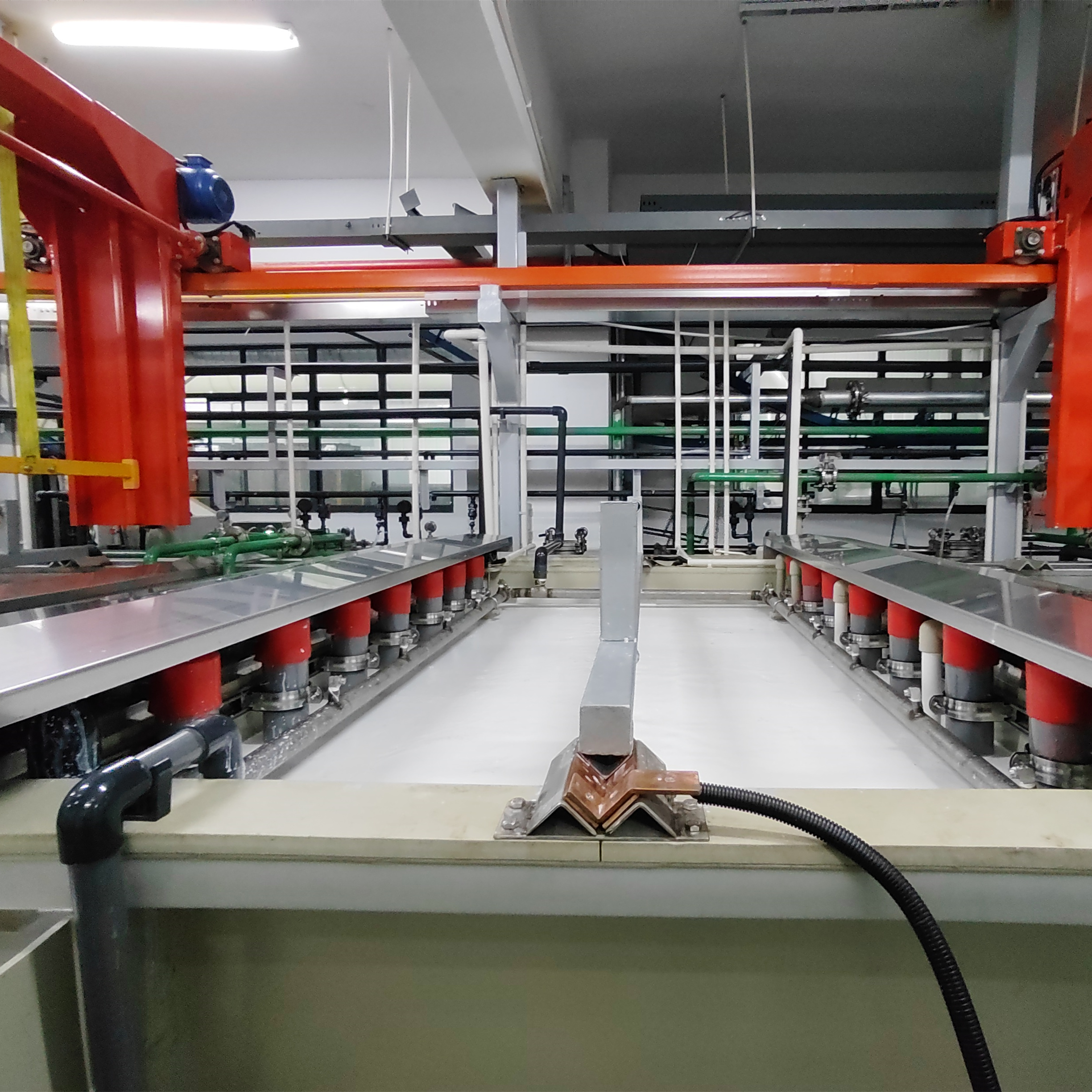
Optimizing the layout of a coating line is one of the most consequential decisions a manufacturing engineer can make. The physical arrangement of your conveyor infrastructure directly determines throughput capacity, product quality consistency, floor space utilization, and long-term operational flexibility. At the center of any well-engineered coating line layout is the choice of conveyor technology, and increasingly, industrial facilities are discovering that a power and free conveyor system delivers the spatial and operational flexibility that conventional conveyor designs simply cannot match.
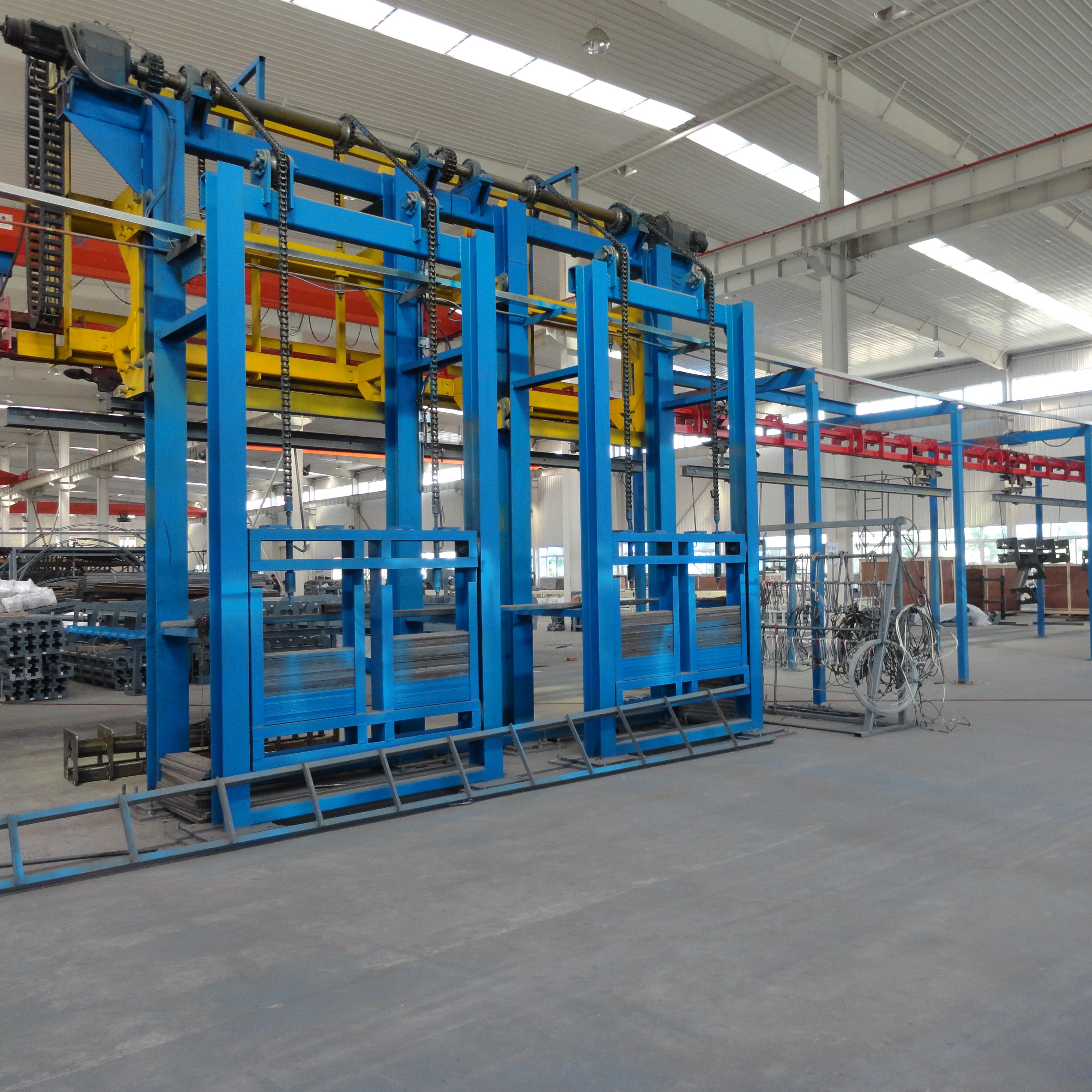
A coating line is not a simple point-to-point transport problem. It involves pretreatment stages, drying zones, application booths, curing ovens, cooling sections, and loading and unloading stations — all of which must be coordinated within a defined plant footprint. The power and free conveyor system architecture allows engineers to decouple carrier movement from the drive chain, enabling independent zone control, accumulation, and routing that is essential for maximizing layout efficiency across every stage of the coating process.
Understanding the Role of Conveyor Layout in Coating Line Performance
Why Layout Logic Drives Throughput and Quality
The layout of a coating line is not merely a floor plan exercise. It is a direct expression of the production logic — the sequence of treatments, dwell times, environmental conditions, and handling requirements that define how a product moves from raw to finished state. When layout decisions are made without a clear understanding of conveyor behavior, the result is often bottlenecks, uneven curing, product damage, or underutilized floor area.
A power and free conveyor system contributes to layout quality because it separates the drive rail from the load-carrying rail, allowing individual carriers to stop, accumulate, or be diverted while the drive chain continues running. This decoupling is not a minor technical detail — it is the fundamental mechanism that allows coating line designers to insert buffer zones, synchronize oven dwell times, and manage variable production rates without forcing the entire line to operate at a single fixed speed.
In practice, this means that a well-designed layout using a power and free conveyor system can absorb upstream delays, accommodate mixed product types with different processing requirements, and allow maintenance access to individual zones without shutting down the entire production floor.
The Relationship Between Zone Sequencing and Carrier Control
Every coating line moves products through a defined sequence of zones — typically pretreatment, rinse, dry-off oven, coating application, flash-off, cure oven, and cooling. Each zone has specific timing requirements and environmental conditions. The conveyor layout must respect these requirements while minimizing the total footprint and travel distance.
The power and free conveyor system enables zone-by-zone carrier control through a system of programmable stops, dogs, and trolley mechanisms. Carriers can be held at a specific zone until the process is complete, then released to proceed — without affecting the movement of carriers in adjacent zones. This is a significant layout advantage because it eliminates the need to design the entire line around a single worst-case dwell time.
Engineers designing coating line layouts with a power and free conveyor system can assign realistic dwell times per zone, size each zone accordingly, and allow the conveyor control logic to manage the coordination. The result is a more compact, more responsive layout compared to a rigid overhead or floor-mounted chain conveyor where every carrier must move at the same pace.
Key Layout Optimization Principles for Coating Line Design
Minimizing Footprint Through Intelligent Path Routing
One of the most immediate benefits of the power and free conveyor system in coating line layout is its ability to route carriers in three-dimensional paths. Unlike floor-mounted conveyors that are constrained to a single horizontal plane, a power and free conveyor system operates overhead, freeing the floor area beneath for equipment, operators, and material handling. More importantly, the overhead rail can be designed to include vertical inclines, declines, and horizontal turns that use building height and floor area together as a three-dimensional resource.
This path flexibility allows layout designers to stack process zones vertically where building height allows, route return paths over active production areas, and bring loading and unloading stations to ergonomically accessible heights without compromising zone sequencing. In facilities where floor space is at a premium, this three-dimensional routing capability of the power and free conveyor system can reduce the total footprint of a coating line by a substantial margin compared to ground-level alternatives.
Routing logic also influences energy efficiency. A well-planned rail path that minimizes unnecessary travel distance reduces conveyor system wear, lowers drive energy consumption, and shortens cycle times. These are not incidental benefits — they compound over thousands of production cycles and contribute meaningfully to the total cost of ownership.
Designing for Accumulation and Buffer Zone Integration
Accumulation capability is one of the defining features that separates a power and free conveyor system from simpler conveyor technologies, and it is central to effective coating line layout optimization. In any production environment, there will be rate mismatches between stages — an oven that processes batches more slowly than the application booth feeds them, or a pretreatment stage that requires a longer dwell for certain product geometries. Without accumulation, these mismatches force line stoppages or speed reductions that reduce overall throughput.
With a power and free conveyor system, buffer zones can be deliberately designed into the layout at strategic points — between pretreatment and the dry-off oven, between the spray booth and the cure oven, and ahead of the unloading station. These accumulation lanes absorb rate differences without stopping the drive chain, keeping the overall line moving and protecting each process zone from the variability of adjacent stages.
The physical design of accumulation zones requires careful attention to carrier spacing, stop mechanism placement, and zone length. These parameters are all configurable within the power and free conveyor system architecture, allowing engineers to right-size each buffer zone for the actual production rates and product mix of their specific coating operation.
Adapting the Layout to Mixed Product Types and Variable Load Geometries
Handling Diverse Product Geometries Without Layout Compromise
Modern coating lines frequently handle a range of product types — different sizes, weights, geometries, and surface requirements — on the same line. This product diversity creates layout challenges that a fixed-speed, uniform-spacing conveyor cannot address without significant compromise. The power and free conveyor system is specifically suited to this challenge because individual carrier spacing is not fixed by the chain pitch but can be adjusted dynamically through the control system.
Larger or heavier products that require more spray time or longer oven dwell can be held in their respective zones while smaller products continue moving. This selective carrier control means that a single coating line layout can serve multiple product families without requiring separate lines, dedicated zones for each product type, or layout modifications when the product mix changes. The coating line layout becomes a flexible production asset rather than a fixed-purpose installation.
Carrier design within a power and free conveyor system is also highly adaptable. Crossbars, hooks, fixtures, and frames can be designed to accommodate a wide range of product geometries, and the carrier height can be set to position products at the optimal angle for coating application and drainage. These carrier-level design choices have a direct impact on coating quality and must be integrated into the layout planning process from the beginning.
Integrating Manual Loading and Automated Transfer Points
Layout optimization for a coating line also requires careful planning of the interface between the power and free conveyor system and the operators or automated systems that load and unload products. Loading stations must be positioned at ergonomically appropriate heights, must provide adequate dwell time for operators to safely hang or remove parts, and must be located in areas with good access and visibility.
The power and free conveyor system supports this through programmable stop positions that hold a carrier at the loading station for a defined period before releasing it to the line. This controlled dwell eliminates the need for operators to match the speed of a continuously moving chain — a significant safety and ergonomics improvement. The layout can incorporate multiple loading stations in parallel if production rates require it, with the control system managing the sequencing of carriers between them.
Automated transfer points — where products are transferred between the coating line conveyor and a secondary handling system — can also be integrated into the layout using the stop-and-release logic of the power and free conveyor system. These transfer points benefit from the precise positioning capability of the system, which allows automated grippers, robots, or transfer conveyors to interface reliably with a stationary carrier rather than a moving one.
Oven Design and Conveyor Layout Coordination
Matching Oven Geometry to Conveyor Path Design
The curing oven is typically the most energy-intensive and space-demanding element of a coating line, and its geometry has a profound influence on the overall conveyor layout. The power and free conveyor system accommodates several oven entry and exit configurations — straight-through, U-turn, and box-loop — each with different implications for floor space, heat retention, and carrier turnaround.
A straight-through oven configuration is the simplest and often the most thermally efficient, but it requires linear floor space that may not be available. A U-turn configuration brings the entry and exit doors of the oven to the same end of the building, which can reduce the conveyor return path length and simplify loading and unloading station placement. A box-loop configuration maximizes the oven dwell length within a compact footprint by routing the carrier path through multiple passes inside the oven envelope.
The power and free conveyor system's ability to navigate turns, inclines, and declines within the oven structure makes all of these configurations feasible without requiring special carrier modifications. The layout engineer must evaluate each option against the available building dimensions, the required oven dwell time, and the desired carrier path continuity to select the configuration that best optimizes the overall coating line layout.
Thermal Zone Management and Carrier Spacing Control
Effective curing requires that products spend the correct amount of time at the correct temperature. In a power and free conveyor system, this is managed through a combination of conveyor speed, carrier spacing, and zone accumulation logic. The layout must be designed so that the oven path length, combined with the carrier speed and spacing, delivers the required thermal exposure for every product type processed on the line.
When product mix changes require different oven dwell times, the power and free conveyor system can accommodate this by adjusting carrier spacing — allowing more or fewer carriers in the oven at a given time — or by temporarily slowing the release rate from the accumulation zone ahead of the oven entrance. This flexibility means that a single oven and a single conveyor layout can serve multiple product specifications without physical modifications to the line.
Thermal energy efficiency is also influenced by carrier spacing. A power and free conveyor system that maintains consistent, optimized carrier spacing minimizes the amount of empty space moving through the oven at any given time, improving the ratio of product mass to oven energy input. This is a layout-level efficiency that must be planned at the design stage and is difficult to retrofit into a line that was not originally designed with this principle in mind.
Long-Term Flexibility and Scalability in Coating Line Layout
Designing for Future Capacity Expansion
A coating line is a long-lived capital asset, and the layout decisions made at installation will influence production capability for many years. One of the most important aspects of layout optimization is designing for future scalability — the ability to expand capacity, add new process stages, or accommodate new product types without requiring a complete redesign of the conveyor infrastructure.
The power and free conveyor system is particularly well-suited to scalable layout design because the rail network can be extended, rerouted, or supplemented with additional spurs and accumulation zones without replacing the entire system. New process stages — a second spray booth, an additional pretreatment stage, or an expanded oven — can be inserted into the layout by modifying the rail path and updating the control system logic, rather than by replacing the conveyor entirely.
This modularity has real financial value. The ability to expand a coating line incrementally, as production demand grows, reduces the capital risk of the initial installation and extends the useful life of the conveyor infrastructure. Layout planning should therefore identify the likely directions of future expansion from the outset and reserve floor space and building height for those expansions, even if they are not immediately needed.
Maintenance Access and Uptime Planning in the Layout
No layout optimization is complete without addressing maintenance access. A power and free conveyor system requires periodic inspection and maintenance of the drive chain, trolleys, carriers, stop mechanisms, and control components. The layout must provide sufficient aisle width, access platforms, and clearance around critical maintenance points to allow technicians to perform these tasks safely and efficiently.
One of the layout advantages of the power and free conveyor system in this regard is that individual zones can be isolated for maintenance while adjacent zones continue to operate, thanks to the accumulation and stop logic built into the system architecture. This partial-line maintenance capability is a significant uptime advantage compared to conveyor systems where any maintenance activity requires a full line stoppage.
The layout should also designate dedicated carrier maintenance and cleaning areas where carriers can be removed from the line, inspected, and returned to service. The rail design should include a convenient bypass or spur that allows carriers to be extracted from the main line path without disrupting production. These maintenance-oriented layout elements are easy to include at the design stage and difficult to add retrospectively.
FAQ
What makes a power and free conveyor system better suited for coating line layout optimization than a standard overhead conveyor?
A power and free conveyor system allows individual carriers to move independently of the drive chain, enabling accumulation, zone-specific stops, and variable spacing. This decoupling gives layout designers far greater flexibility in managing zone dwell times, absorbing production rate mismatches, and routing carriers through complex three-dimensional paths. A standard overhead conveyor moves all carriers at the same speed with fixed spacing, which forces the entire layout to be designed around the slowest or most demanding process stage.
How does accumulation capability in a power and free conveyor system affect the overall footprint of a coating line?
Accumulation zones act as buffers between process stages with different throughput rates. By absorbing these rate differences within the conveyor path rather than forcing layout compromises, a power and free conveyor system allows each process zone to be sized for its own optimal throughput rather than the slowest common denominator. This results in a more compact and efficient overall layout because unnecessary oversizing of individual zones is avoided.
Can a power and free conveyor system handle multiple product types on the same coating line layout?
Yes. The independent carrier control of a power and free conveyor system allows different products to receive different dwell times, spacing, and routing within the same layout. Carriers can be held in specific zones for the duration required by each product type, then released when processing is complete. This makes a single coating line layout capable of serving a diverse product mix without physical modifications or dedicated sub-lines for each product category.
What should engineers prioritize when planning a coating line layout around a power and free conveyor system?
The most important priorities are zone sequence logic, dwell time requirements per zone, accumulation zone sizing, oven geometry selection, loading and unloading station ergonomics, and future expansion pathways. The power and free conveyor system provides the infrastructure flexibility to address all of these, but the layout must be planned with each factor explicitly considered. Early coordination between conveyor system designers, process engineers, and facility planners is essential to achieving a layout that is both operationally efficient and scalable over the long term.
Table of Contents
- Understanding the Role of Conveyor Layout in Coating Line Performance
- Key Layout Optimization Principles for Coating Line Design
- Adapting the Layout to Mixed Product Types and Variable Load Geometries
- Oven Design and Conveyor Layout Coordination
- Long-Term Flexibility and Scalability in Coating Line Layout
-
FAQ
- What makes a power and free conveyor system better suited for coating line layout optimization than a standard overhead conveyor?
- How does accumulation capability in a power and free conveyor system affect the overall footprint of a coating line?
- Can a power and free conveyor system handle multiple product types on the same coating line layout?
- What should engineers prioritize when planning a coating line layout around a power and free conveyor system?